You are here Home » News
News
Meeting of representatives of the Institute for Public Administration Prague and the School of Public Administration Meissen
Benešov, January 2024

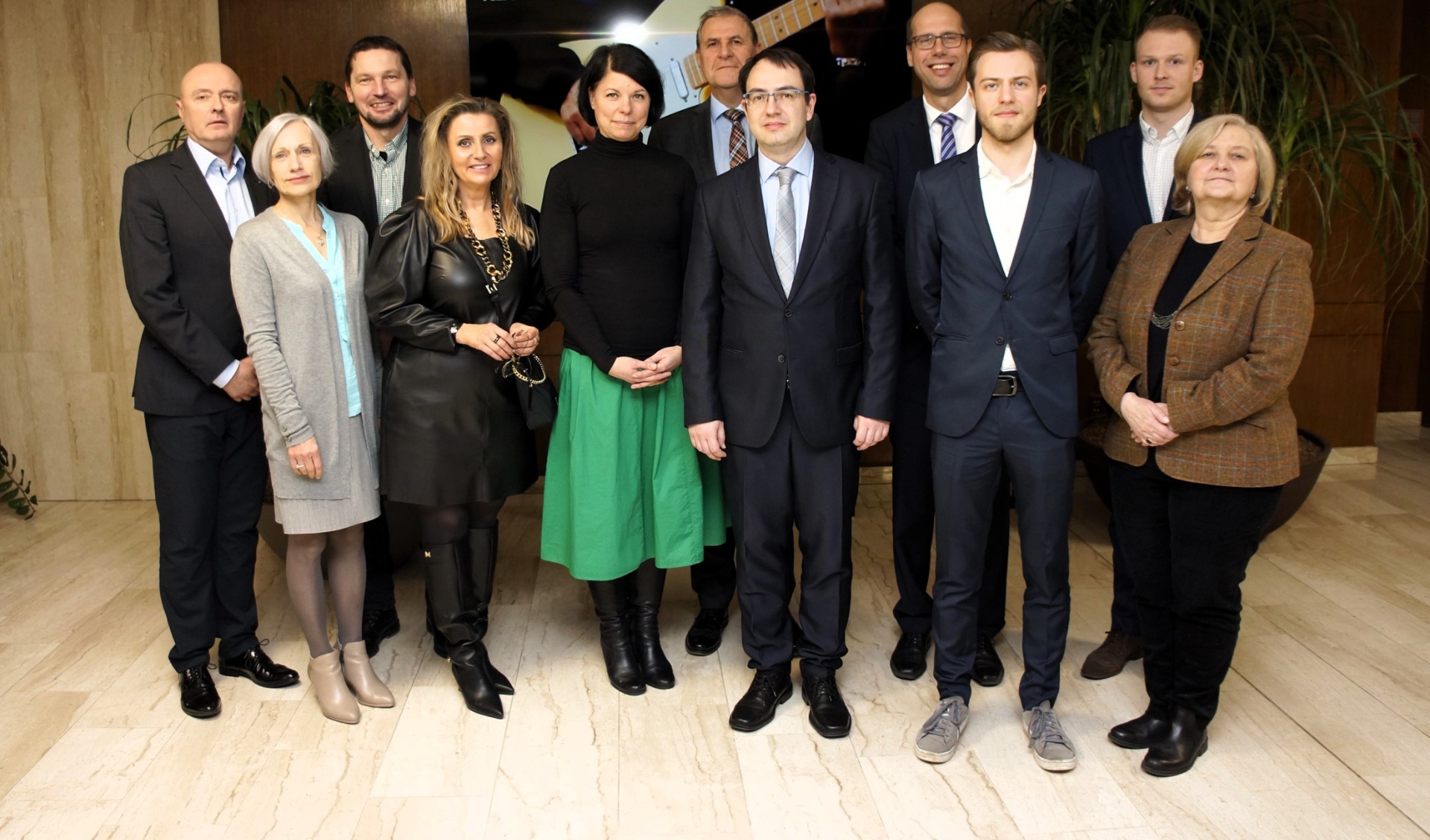
The effectiveness of meetings that lead to other useful working initiatives is demonstrated by the meeting of representatives of the Institute for Public Administration Prague and the School of Public Administration Meissen (Fachhochschule Meissen), which took place at the end of January at the Benešov Training Centre. The two-day meeting, facilitated by Josefina Ofner, Director of the Contact Office of the Free State of Saxony in Prague, who also attended, brought many interesting insights.
The Saxon delegation, represented by the rector Frank Nolden and chancellor Frank Degenkolbe, was welcomed by the Institute's director Anna Doležalová and followed by detailed presentations. Jan Roneš, head of the Unit of Training and Self-Government Agendas of Territorial Self-Government Units at the Department of Public Administration, Supervision and Control of the Ministry of the Interior of the Czech Republic, presented the concept of training of public administration officials in the Czech Republic and the cooperation of the ministry with universities in the field of their training.
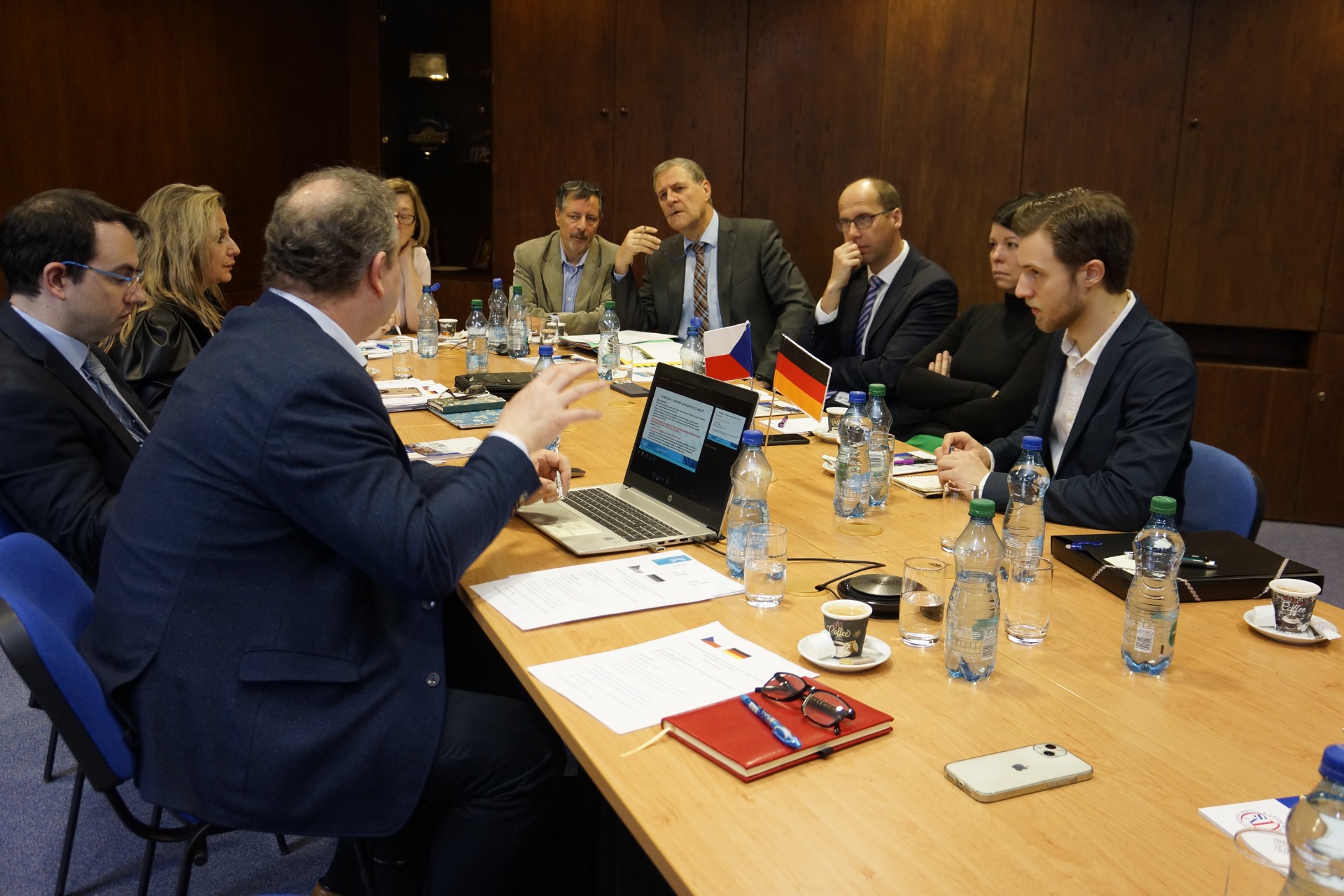
He was followed by Lukáš Jirsa, Head of the Development and International Cooperation Department of the Institute, who, in addition to the system of public administration of the Czech Republic and the main activities of the Institute, also focused on the training of public administration officials in the conditions of the Institute.
The next programme of the meeting focused on the presentation of the School of Public Administration Meissen, which was founded in 1992 and is the only training institution in the Free State of Saxony providing the highest and most comprehensive training for future public administration officials as well as continuing training for existing ones. The studies consist of a two-year course of theory and a one-year course of practice. It is thus not a type of classical university study but a vocational training, which is also represented by the name of the Fachhochschule, and each federal state has its own school of public administration.
At present, the School of Public Administration Meissen offers 5 basic fields of study (General Public Administration, Digital Administration, Legal Care, Social Administration and Social Security, Tax and Public Finance Administration) and is attended by 1,120 students. Young public administration officials are sent by their employing authority to study and can then work in any federal state. These situations arise because officials are paid better in the western parts of Germany.
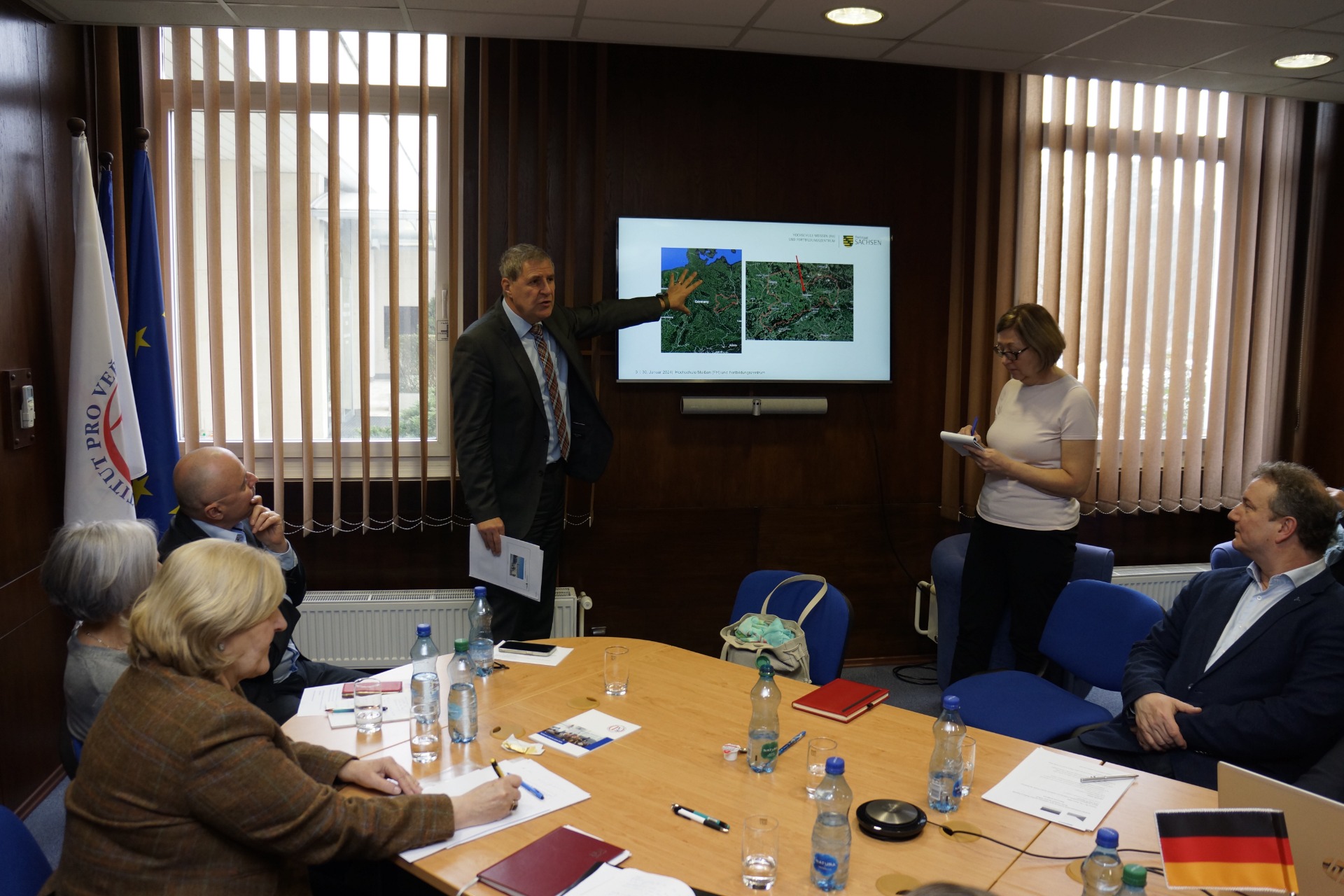
In the afternoon part of the meeting, Filip Janský, representative of the Institute's Training department, introduced the Saxon colleagues to the implementation of new trends in training, including the use of virtual reality elements in training courses. He was followed by Zdeňka Šilhová, head of the Training Department, who presented the Institute's training programmes for public administration managers (MBA, MPA, LL.M.) and the new course of the Academy of Secretaries of the Territorial Self-Government Units. The programme of the first day was rounded off with a presentation of international cooperation between the two institutions and a discussion on common topics in this area (e.g. cooperation within international associations, the Summer School of Training in Public Administration, etc.).
The Saxon colleagues also appreciated the premises of the Benešov Training Centre and the complexity of the services offered.
The second day of the meeting was dedicated to a discussion between representatives of the School of Public Administration Meissen and representatives of the University of Pardubice on possible forms of cooperation.
Meeting of representatives of the Institute and Zurab Zhvania School of Public Administration
Prague and Benešov, January 2024

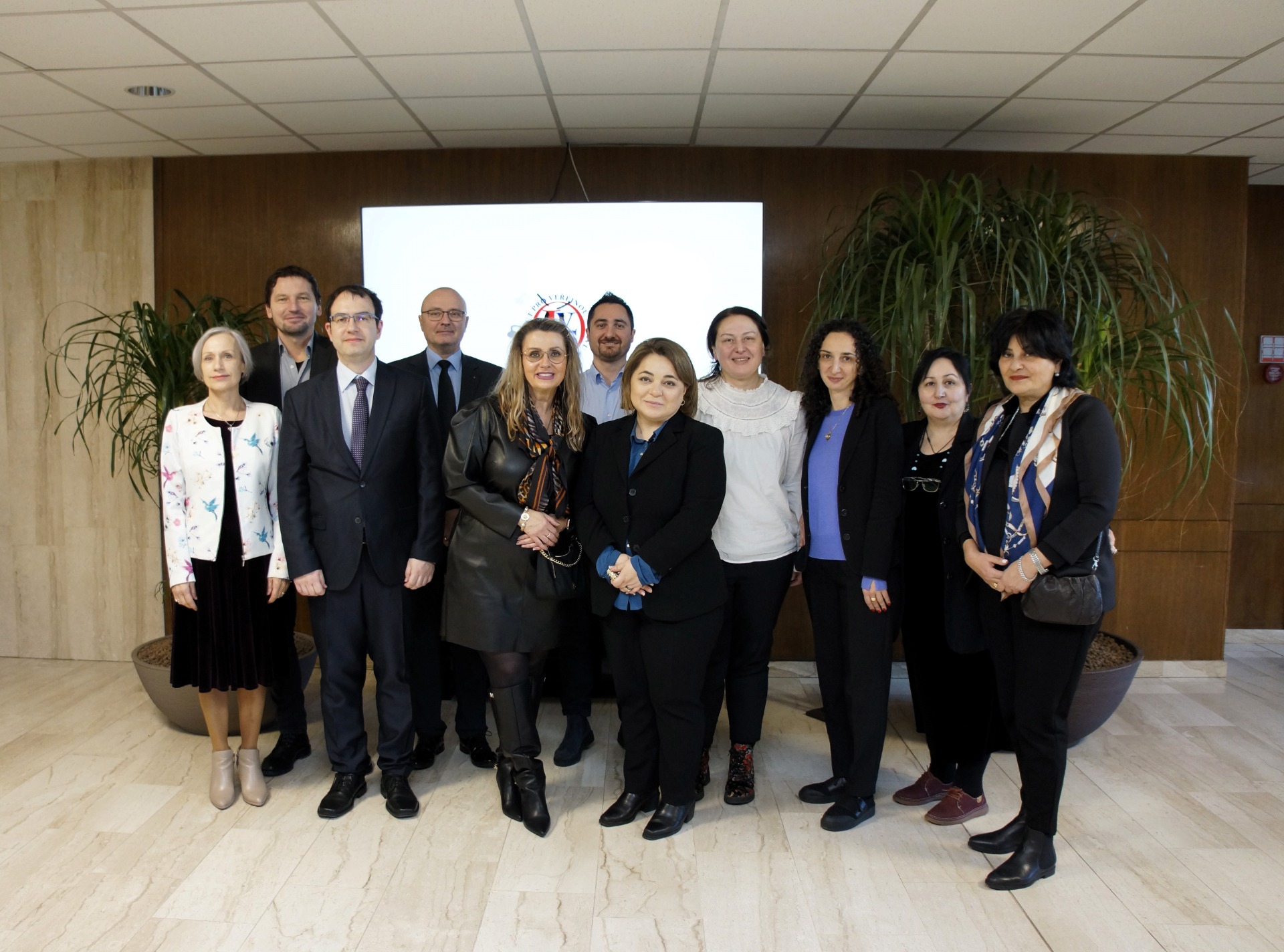
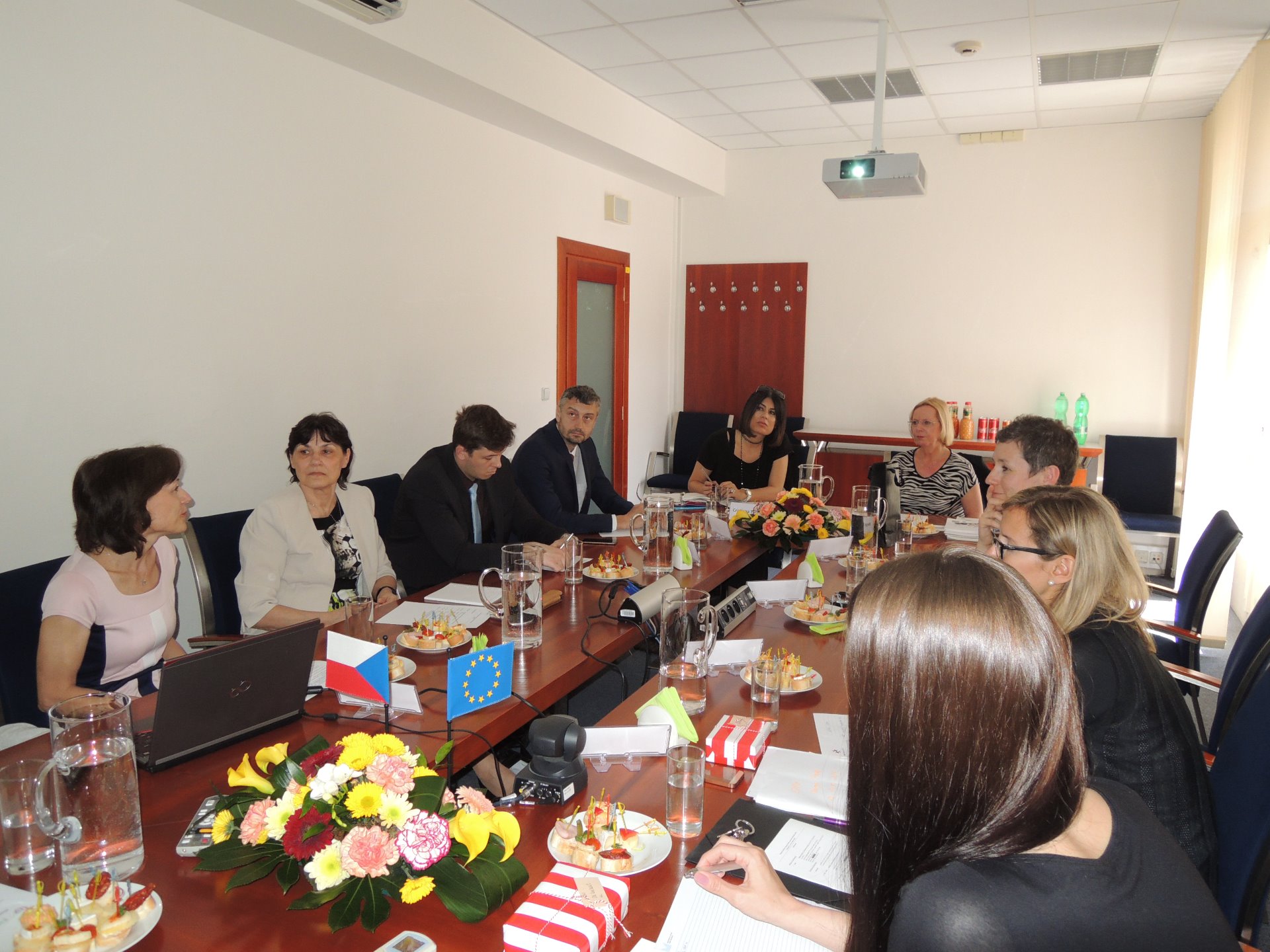
On the basis of the implementation of the Memorandum of Cooperation between the two institutions, a six-member Georgian delegation from the Zurab Zhvania School of Public Administration led by its Director Ketevan Jakeli was received at the Institute on 24 - 25 January 2024.
The Georgian colleagues were welcomed at the Institute's Prague headquarters by the director Anna Doležalová and after introducing the main activities of both training institutions, a presentation by the head of the training department Zdeňka Šilhová on quality assurance from the point of view of the Institute and adult training followed. She introduced the framework of training and presented the accreditation and evaluation process
of training programmes in detail.
The delegation then moved on to the Benešov Training Centre, where the programme continued with a tour of the centre and, with the campus being built in Georgia, colleagues gained valuable inspiration for many solutions. This was followed by a presentation of managerial training programmes for public administration (MBA, MPA, LL. M.). The guests were introduced to the course and content of these studies in detail, including the possibilities of applying these study programmes.
Georgian colleagues were also very interested in the organisation of the Summer School of Public Administration Training, its concept, functioning, selection of topics and content. They consider this project as a very suitable platform for meetings and exchanging best practices of schools and institutes in public administration from EU and non-EU member states, as well as an opportunity to discuss missteps in the development of various training concepts and programmes.
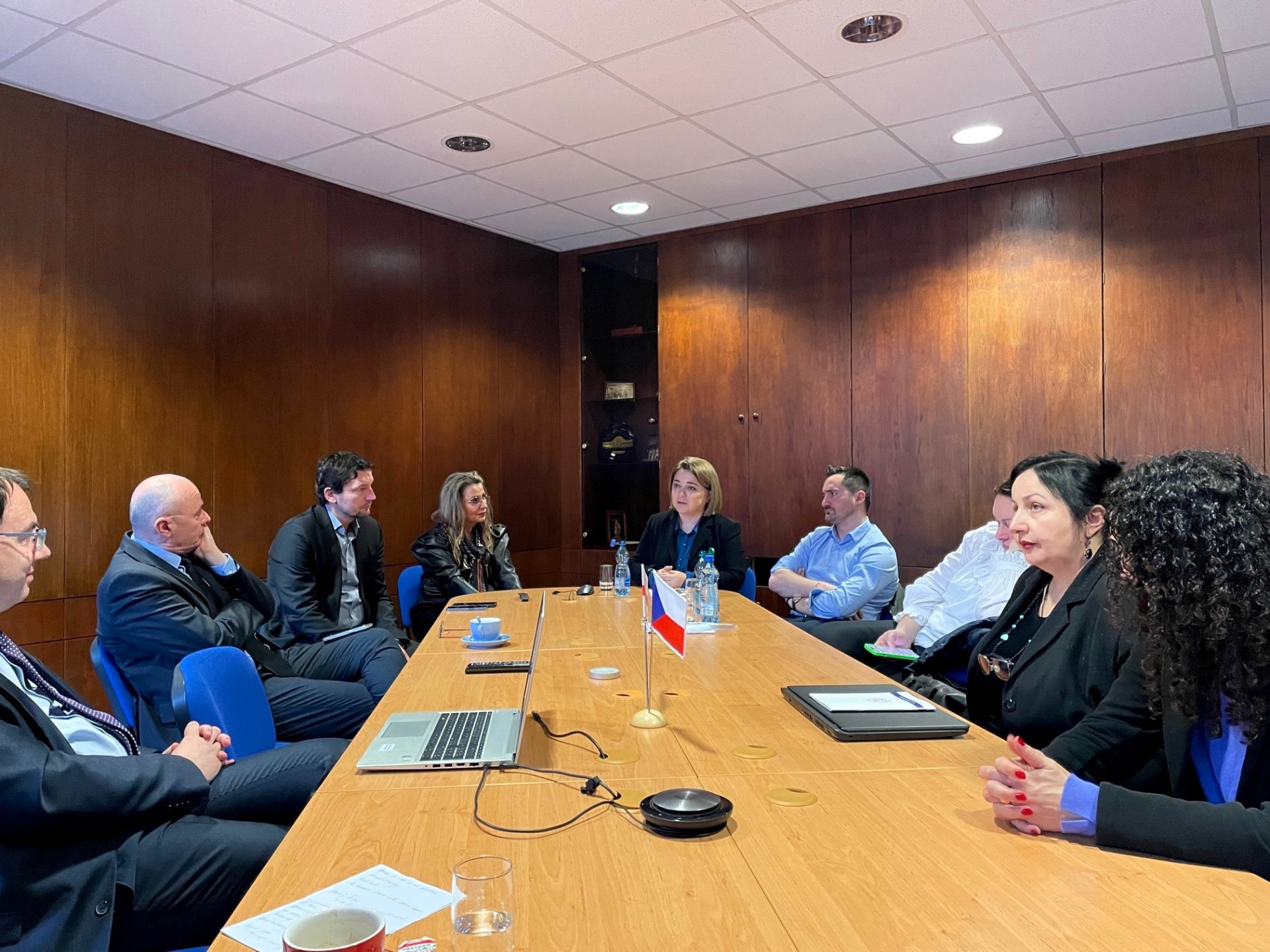
The methodology of teaching the Czech language to foreigners also aroused great interest among the Georgian partners. Since the Institute does not deal with language teaching, representatives of the Institute for Language and Vocational Training of Charles University, namely its director Dana Hůlková Nývltová and head of marketing Petra Šedivcová, were invited to introduce them to the methods of language teaching and subsequent study of foreign students in Czech. From the Georgian side, it became clear that in distant regions of the country, Georgian, unlike Russian or local dialects, is not used at all. Therefore, language training and language proficiency in training are considered important for the public administration.
The two-day meeting culminated with a presentation by Milan Chmura from the Faculty of Education, University of Ostrava, who focused on the issue of quality assurance in adult training in the European framework from an academic perspective.
Announcement of the results of the 17th year of the Office on the Way to Equality competition and expert conference
Prague, November 2023
The Office on the Way to Equality competition, organised in cooperation with the Ministry of the Interior and the Office of the Government of the Czech Republic, is a traditional event and on 28th November 2023 the results of the 17th year were announced. The ceremony took place in the representative premises of the Liechtenstein Palace in Prague's Kampa thanks to the kindness of the Office of Government and was held under the auspices of the wife of the President of the Czech Republic, Mrs. Eva Pavlová, First Deputy Prime Minister and Minister of the Interior Vít Rakušan and Deputy Minister for European Affairs and Government Commissioner for Human Rights Klára Šimáčková Laurenčíková.
The theme of this year's event was "How do regional, city and municipal authorities deal with gender discrimination in the workplace and How do they help women at risk of social exclusion?" A total of 38 authorities participated in the four competition categories.
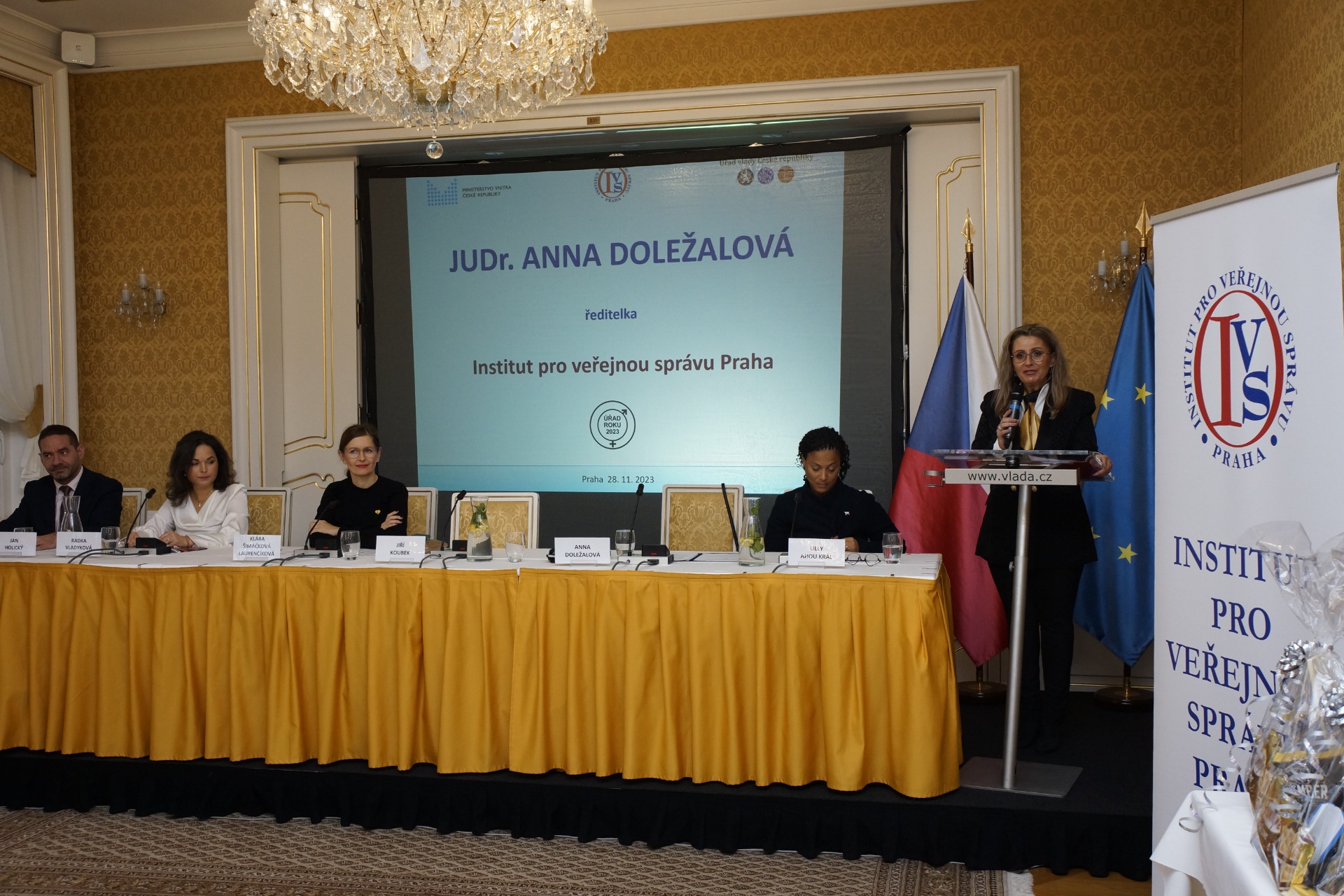
The opening speeches were delivered by the Director of the Institute for Public Administration Prague Anna Doležalová, the Chief Director of the Public Administration Section of the Ministry of the Interior Jiří Koubek and the Government Commissioner for Human Rights Klára Šimáčková Laurenčíková. Greetings of the wife of the President of the Czech Republic, Ms. Eva Pavlová, was delivered by a member of her content team, Lilly Ahou Král. Afterwards, the participants of the announcement were greeted by the Chairman of the Association of Town and Municipal Chief Local Executives of the Czech Republic and also the Chief Local Executive of the Prague 6 Municipal District Jan Holický, who spoke, among other things, about the crucial role of education and pre-school care as a prevention of social exclusion of women and work-life balance. He was followed by Radka Vladyková, Executive Director of the Union of Towns and Municipalities of the Czech Republic, who emphasized the high proportion of women in office, especially in the smallest municipalities with populations under 1,000.
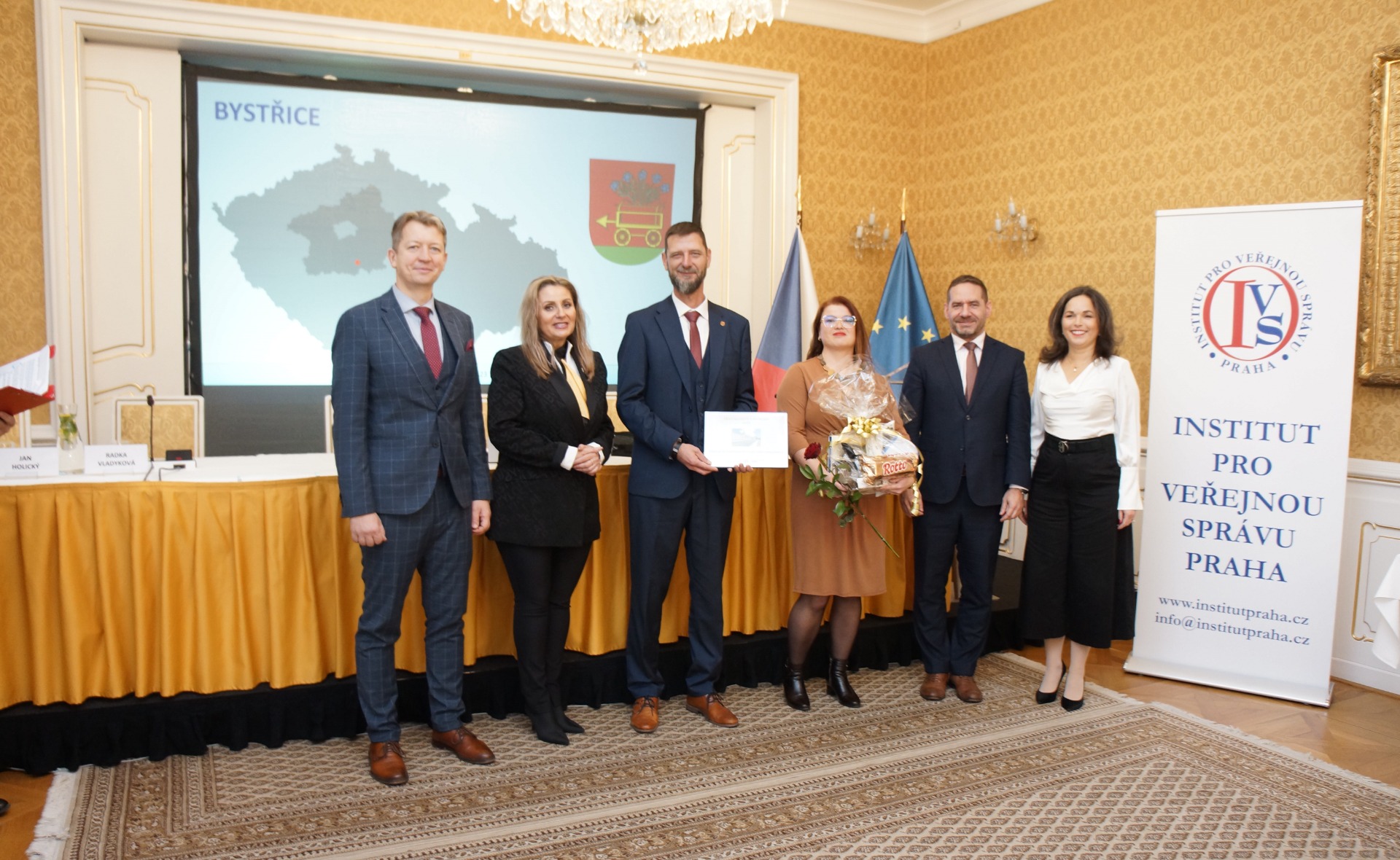
The programme continued with the award ceremony and the presentation of awards to the winning authorities. Results of this year in the individual categories:
|
First place |
Second place |
Third place |
|
|
Municipality of type I |
Bystřice |
Kamýk and Vltavou |
Hlavice |
|
Municipality of type II |
Starý Plzenec |
Lomnice and Popelkou |
Kamenice |
|
Municipality of type III |
Praha 5 |
Praha 22 |
Hodonín |
|
Regional Authorities |
Hlavní město Praha |
Zlínský kraj |
Olomoucký kraj |
The announcement of the competition results was followed by an expert conference focused on the issue of helping women at risk of social exclusion. The conference was divided into three expert panels on the support of single mothers, victims of domestic violence and homeless women.
In the first panel on supporting single mothers, Lilly Ahou Král, a member of the content team of the wife of the President of the Czech Republic, Ms. Eva Pavlová, emphasized the need to support the availability of health care for children and a functioning family environment. She was followed by the President of the Czech Federation of Food Banks, Aleš Slavíček, who spoke about new locations of food dispensaries based on cooperation with a city or municipality, as well as menstrual poverty. Lenka Boháčková, a representative of Women for Women, presented specific projects aimed at supporting single mothers, such as lunches for children in schools and kindergartens, supported housing including rent deposits, and social and legal counselling. The panel was closed by the head of the Department of Social Affairs and Health of the Prague 14 Municipality, who shared examples of good practice in the area of housing, community and maternity centres and leisure time.
The second panel, devoted to victims of domestic violence, featured Drahomíra Komedová, head of the personnel and payroll department of the Prague 5 Municipal Office, who spoke about the establishment of crisis accommodation and a contact point for housing. The Mayor of Bystřice, Michal Hodík, presented concrete cooperation with the Police of the Czech Republic in creating informational videos on this topic. The signs, forms and causes of domestic violence were summarised in her presentation by Martina Petrovičová from the Department of Methodology and Support for the Performance of the Service of the Directorate of the Order Service of the Police Presidium of the Czech Republic. She also focused on the special approach to victims of domestic violence, criminal legal liability and eviction. Branislava Marvánová Vargová, head of the information and counselling centre ROSA - Centre for Women, provided information on asylum accommodation or crisis housing and facts on the issue of domestic violence.
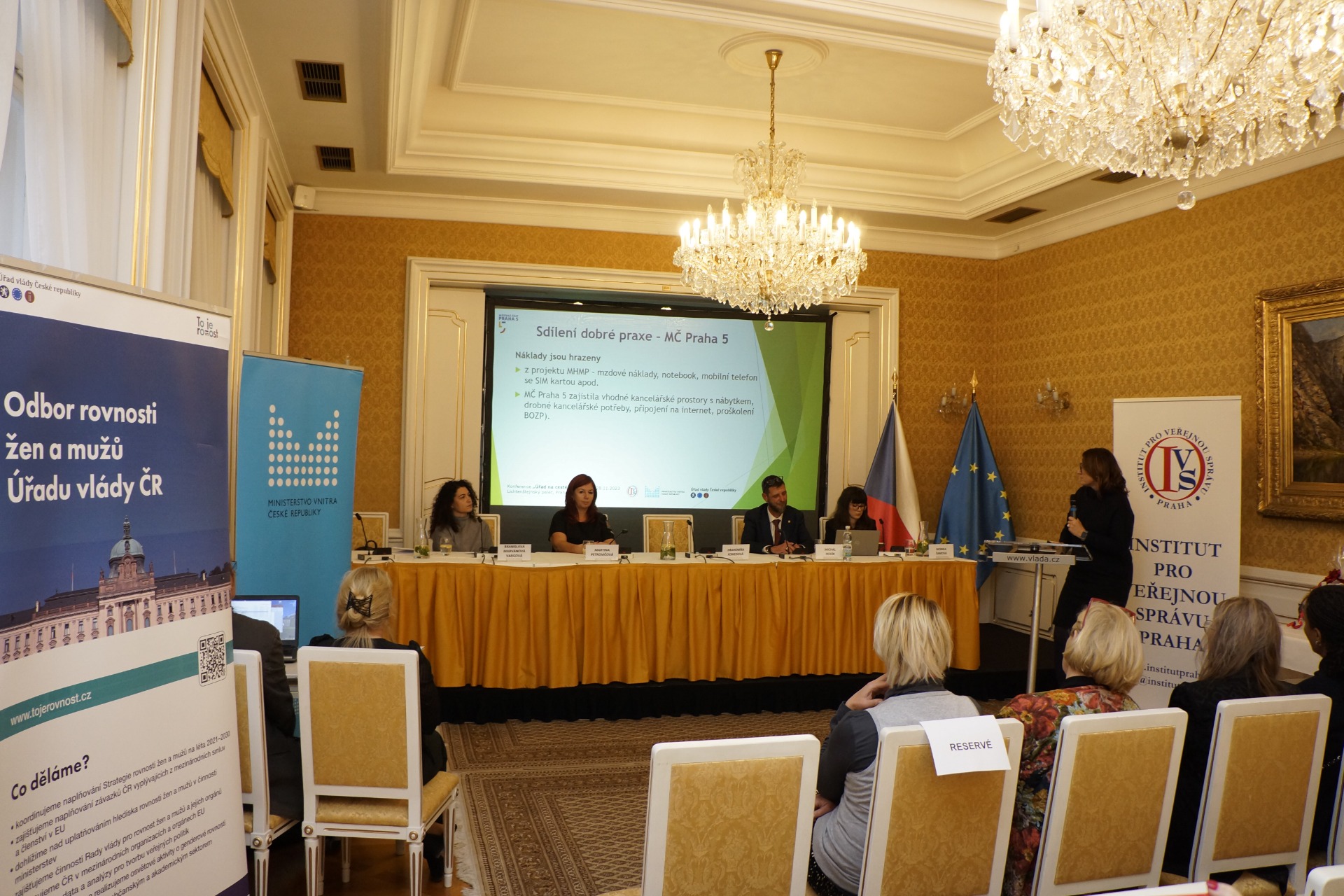
The final panel on homeless women was opened with concrete examples of good practice by Libor Vojtek, chief local executive of the Statutory City of Prostějov. Sabina Ludvíková from the Ministry for Regional Development of the Czech Republic presented the new law on housing support, especially the pillars of the law and support measures. Daniel Svoboda, regional director of the non-profit organisation Naděje, spoke about the services offered to homeless women and the differences that need to be taken into account in the provision of services to homeless men and women. The next speaker was Lenka Vrbová, representative of the non-profit organization Jako doma - Homelike, which is dedicated to helping homeless women through the emancipation of women in social distress and the elimination of social and gender inequalities. She also mentioned the Homeless Cooks Community Centre, whose culinary art the participants had the opportunity to taste during the conference.
Despite the coming freezing weather, the whole festive day was held in a friendly, inspiring and very stimulating atmosphere.
DISPA meeting in Spain
Alcalá de Henares, October 2023

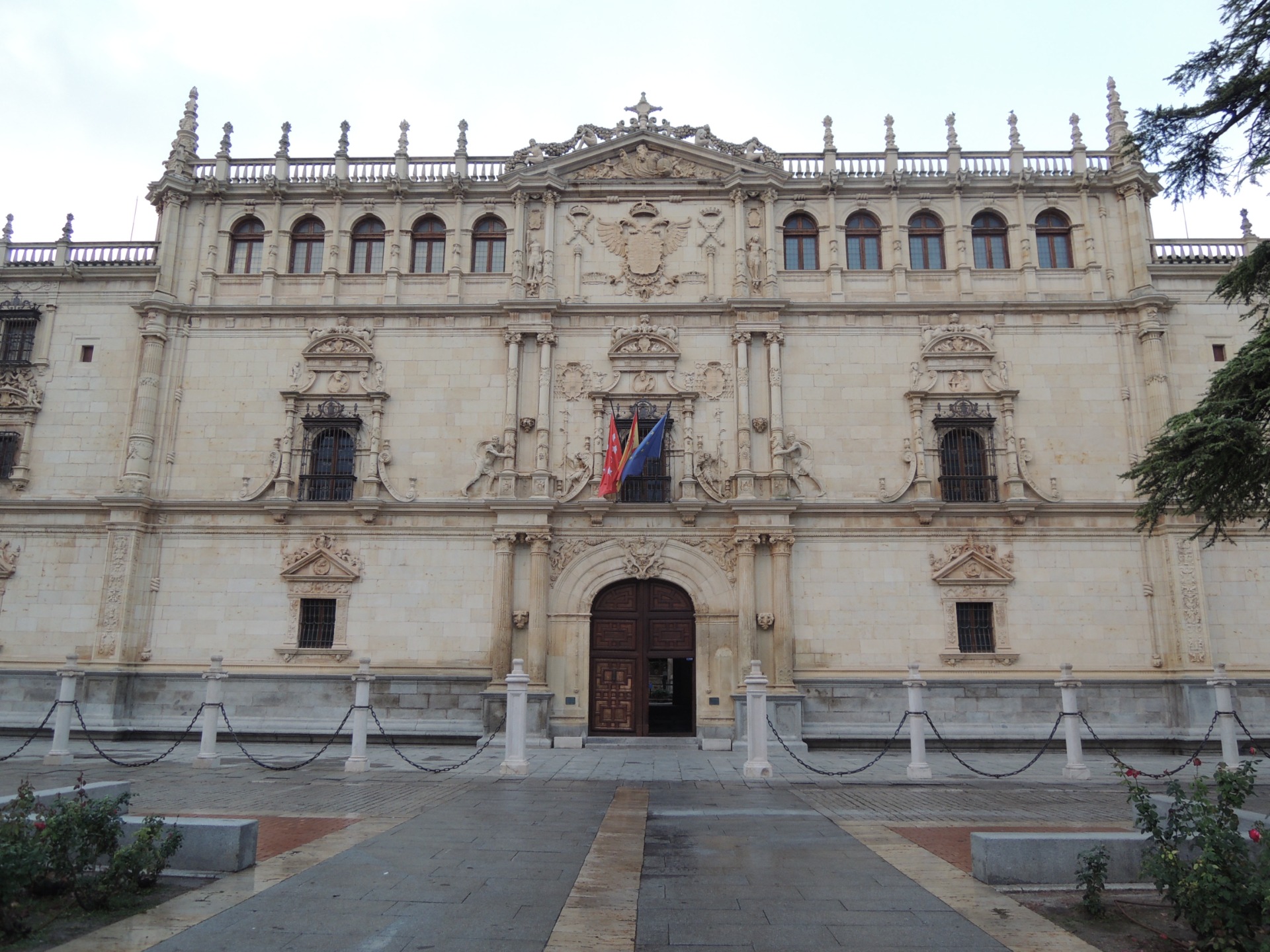
At 23 – 24th October 2023 representatives of the Institute participated at the other meeting of directors of institutes and schools of public administration (DISPA) held in the Spanish city of Alcalá de Henares.
A central topic of the two-day conference was the „European Technical Cooperation as a Driver for Innovative Public Policies“.
Approximately fifty representatives of schools and institutes of public administration from EU Member States, EU institutions and some non-EU countries, including for the first time representatives from Latin American institutions, gathered at the historic headquarters of the Instituto Nacional de Administración Pública, which hosted the meeting on the occasion of the Spanish Presidency of the Council of the EU.
The presentations included models of international technical cooperation strategies from the European and Latin American perspectives, presentations of competences for innovative policy-making and traditional workshops.
The next meeting will take place in April 2024 under the Belgian Presidency of the Council of the EU.
DISPA Meeting May 2023
Stockholm, May 2023


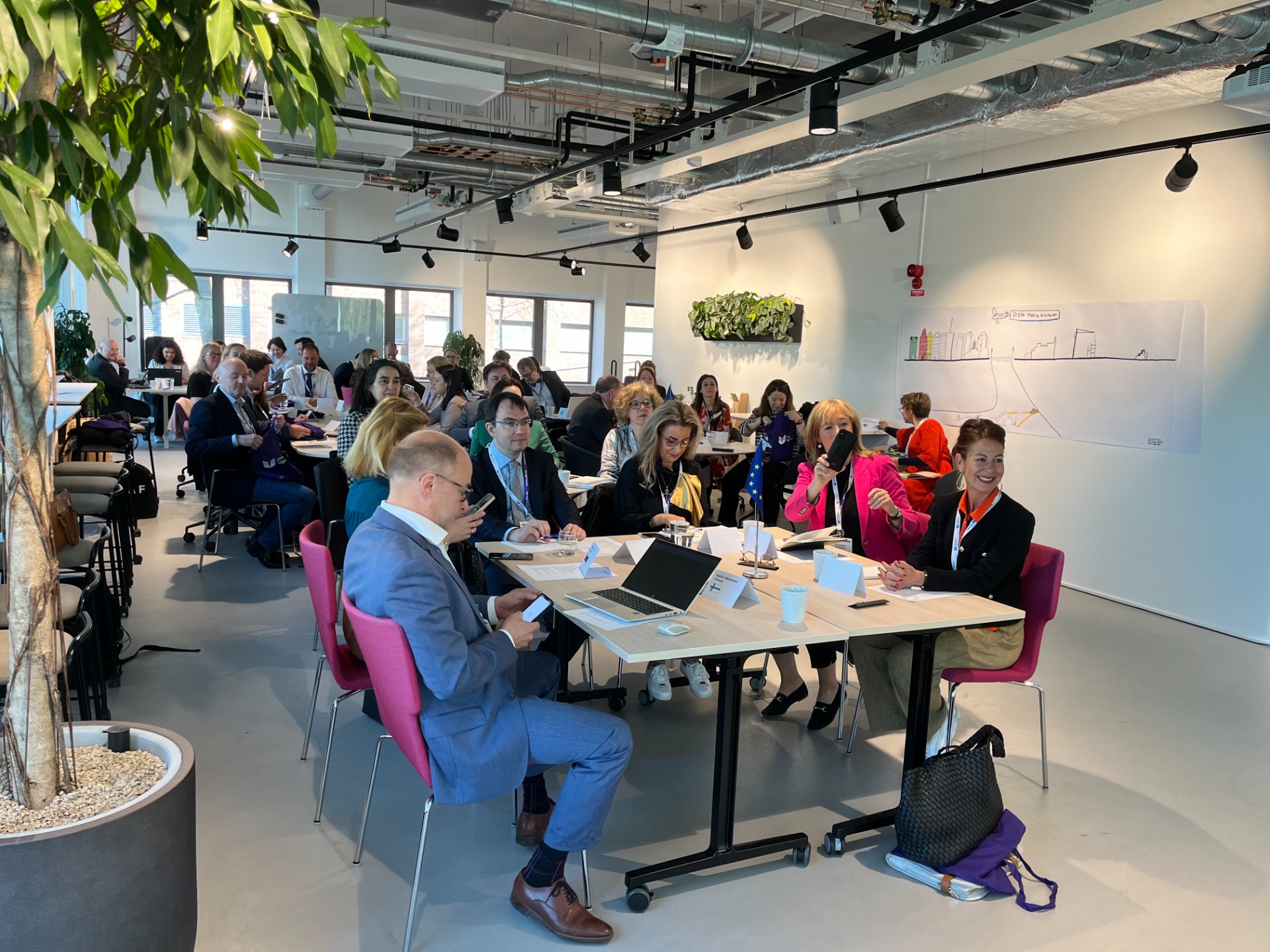
The international meeting of directors of European institutes and schools of public administration (DISPA) was held in mid may 2023 in Stockholm under the Swedish presidency of the Conucil of EU. Crisis management was the topic of this meeting and the representative of the Institute has an opportunity to present a paper on digital innovations for better communication.
In further presentation the professor of Lund University presented various types of crisis management and reactions on imminent threat. The director of Centre of Social Security at Swedish Defense University was dealing with the issue of crisis management in public administration. The following presentations were also inspiring – the one by the president of German Federal Academy of Public Administration (BAKöV), who spoke about the agility approach as a proved way for orientation in crisis time or the paper by a representative of Estonian Top Civil Service Excellence Centre on the development programme for crisis management. The director of the Finnish institute of public administration HAUS, who introduced three modular training programmes or a representative of Directorate General for Human Resources of Europena Comission that spoke abot crisis management during pandemics.
DISPA Conference - European Meeting in the Heart of Prague
Prague, October 2022
In the second half of October 2022, the Institute for Public Administration Prague (the Institute) organised the international DISPA conference.
The conference, attended by over 50 foreign delegates, was held in the beautiful surroundings of the reconstructed baroque Clam-Gallas Palace in the historic centre of Prague, thanks to the kindness of the Prague City Hall.
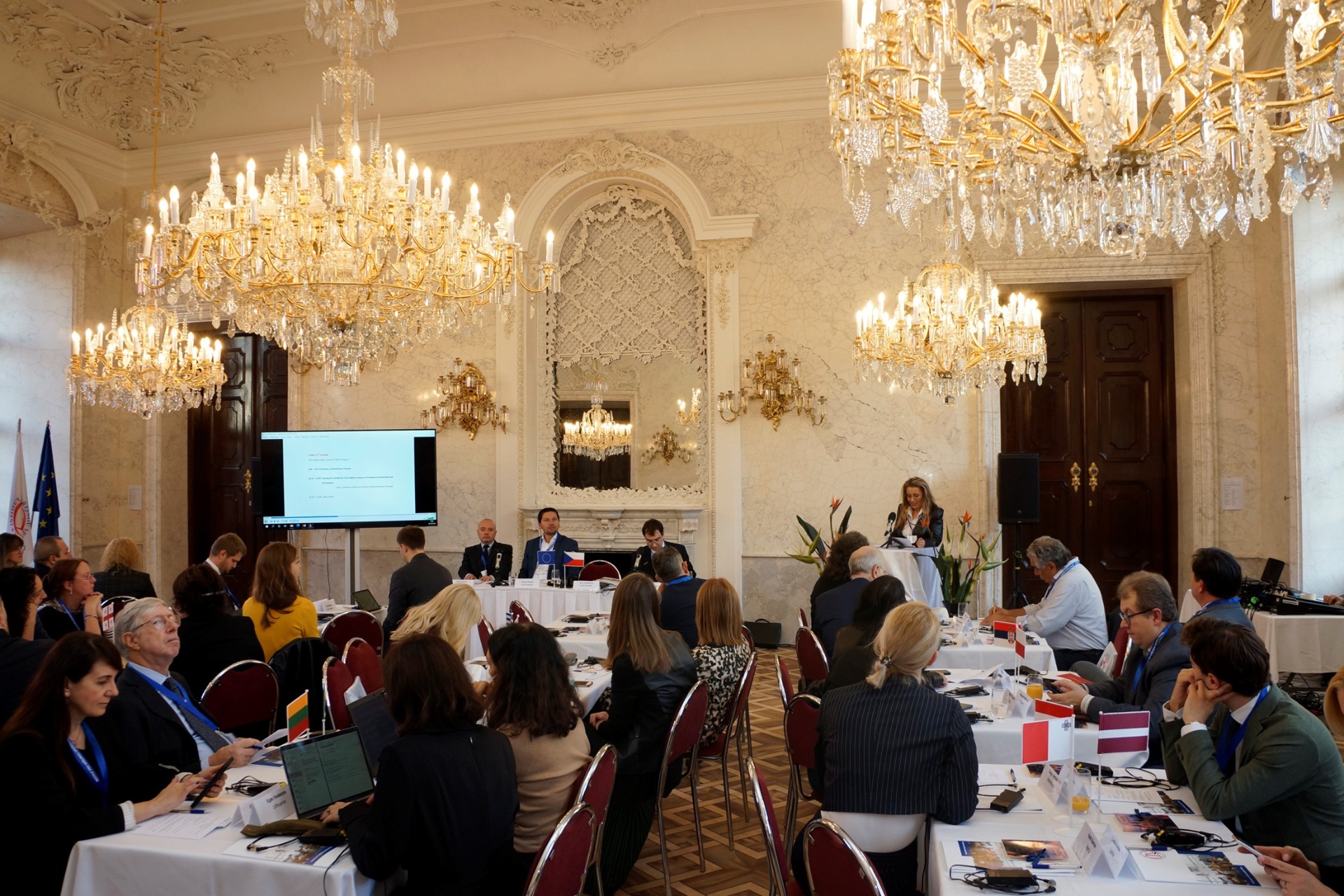
The main theme of the conference was the „Digitalization of Public Administration in the Context of Training of Officials, an issue that resonates with public administrations across Europe. The conference participants were welcomed at the beginning by the director of the organizing Institute Anna Doležalová, Deputy Minister of the Interior for the Public Administration and eGovernment Section David Sláma and Deputy Director of the Prague City Hall for the Territorial Decision Making Section Tomáš Veselý.
The morning session of the first day of the conference offered a look at the digitalization of public administration from different perspectives. First, Tomáš Šedivec from the Department of the Chief Architect of eGovernment of the Ministry of the Interior discussed the state of digitalization in the Czech Republic. He was followed by Michal Czudek, head of the Department of International Cooperation in the Civil Service. Tomáš Kotyza, director of the Regional Authority of the Moravian-Silesian Region, presented the view of the regional authority on digitalization and employee training. Furthermore, Radko Sáblík, director of the Smíchov Secondary Industrial School and High School and Michael Kalista, a graduate of the school, addressed the issue of secondary education and related digitalization. Thanks to the Smíchov Industrial School, the participants also had the opportunity to try on virtual reality goggles in the foyer of the palace.
The afternoon part of the first day was dedicated to parallel professional workshops. Digitalization of training and related sociological aspects were the topic of the first one. The introductory paper was presented by Petr Lupač from the Department of Sociology, Faculty of Arts, Charles University. Participants mainly discussed what kind of problem we are facing at all and what amount of digitalization is beneficial. Solving the problem in a group of people with different social backgrounds and how to approach these groups in training, or what digital skills and how to teach them, including their practical use in everyday life are other issues that were widely discussed during this workshop.
The second workshop was focused on sharing training programmes among DISPA members. The opening presentation by Jaroslav Vobr and Filip Janský from the Institute's Training Department focused on the projects and training courses that the Institute is involved in. The greatest response was generated by the currently implemented project "Communication with Persons at risk of Social Exclusion" and the ongoing module "Communication of Authorities with the Elderly Population", which would be suitable for sharing within the framework of European cooperation.
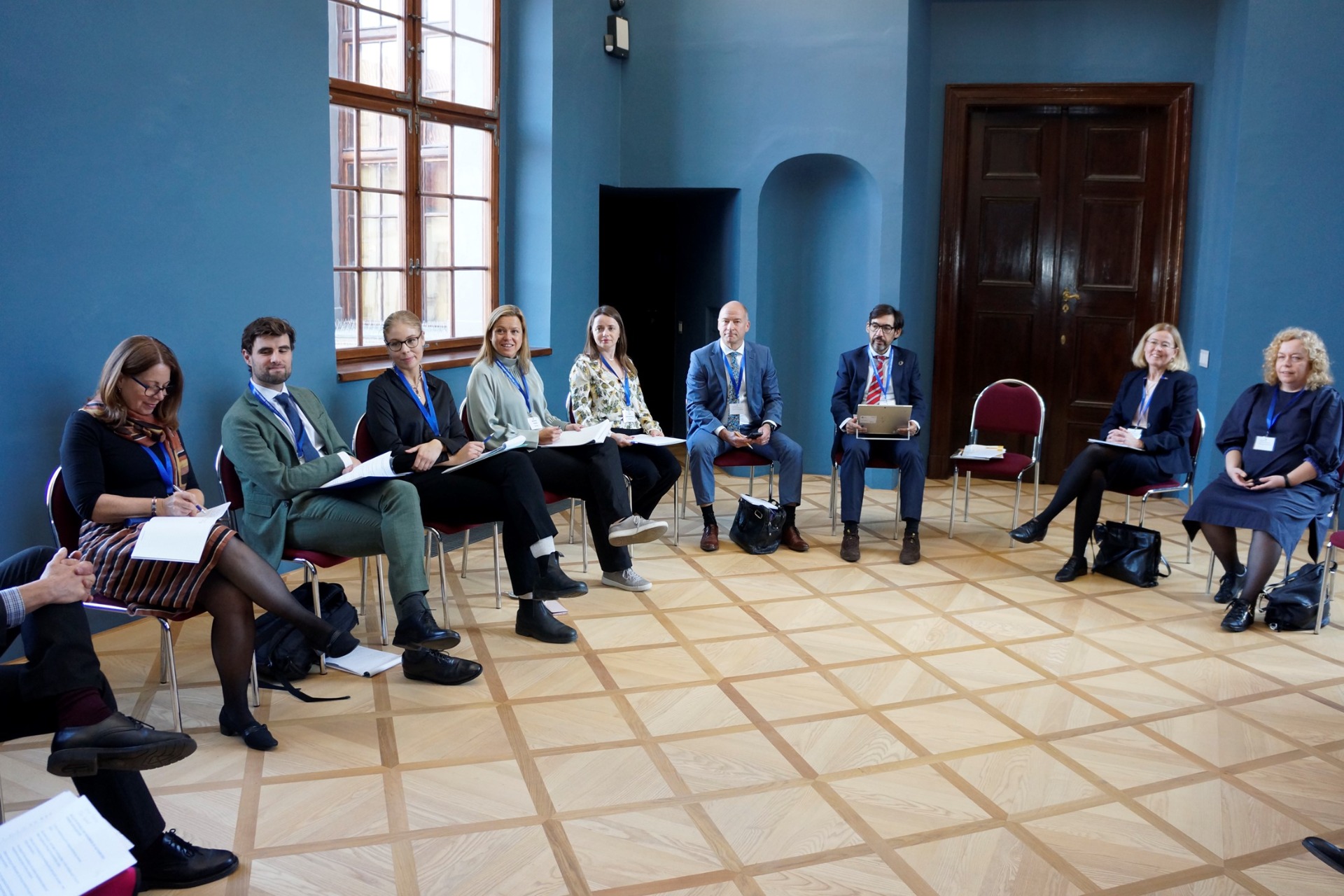
Discussion was held on the issues of initial testing of digital skills in the context of the admission procedure and subsequent continuous mandatory refreshment training. Participants agreed that the testing of digital skills already during the admission procedure is appropriate, as well as a further comprehensive system of refreshment and in-depth training. In the last part of the workshop, Zdeňka Šilhová, head of the Training Department, presented the Institute's new project - the use of virtual reality with artificial intelligence. Although most of the participants had no experience with virtual reality courses and thus no clear idea of their use, they agreed that this is an innovative area that can make certain courses more attractive for public administration officials.
The first day of the conference was traditionally concluded with a gala dinner, which was met with an enthusiastic response.
The second day of the conference was opened with a summary of the outputs from the workshops of the previous day, followed by a block of foreign contributions. In the contribution entitled "From Digital Literacy to Promoting Citizenship", Sofia Crisóstomo, representative of the Portuguese National Institute of Administration, presented a series of training programmes promoting active civic participation and related digitalization. The programme of interactive training courses was presented to the delegates by Dejan Miletić, director of the Serbian National Academy of Public Administration. This was followed by a presentation by Israel Pastor from the Spanish Instituto Nacional de Administración Pública, who presented the national digital skills policy, including the digital skills competency framework and the competency framework for teleworking for public administration employees. The representative of the hosting Institute presented the European Reciprocal Training Programme, a traditional initiative that organises study visits for public administration officials from European countries, with specific individual meetings with representatives from an office equivalent or similar in terms of responsibility to the participant's home office.
A traditional part of the conference was the presentation of news from the Brussels-based European School of Administration, which acts as the coordinating body of the DISPA network, and we were very pleased to welcome guests of honour Marian O'Sullivan, former director of the Irish Institute of Public Administration, and Mario Michaelides, former director of the Cyprus Academy of Public Administration, who summarised their long-standing involvement in the DISPA network.
The highly topical theme, erudite speakers, unique environment of the venue, interesting accompanying programme and overall event arrangements all contributed significantly to a very successful conference and a very positive evaluation of the delegates. We are delighted that the Institute has been able to contribute very successfully to the long line of such beneficial and traditional conferences and to pass the imaginary baton to the Swedish Presidency.
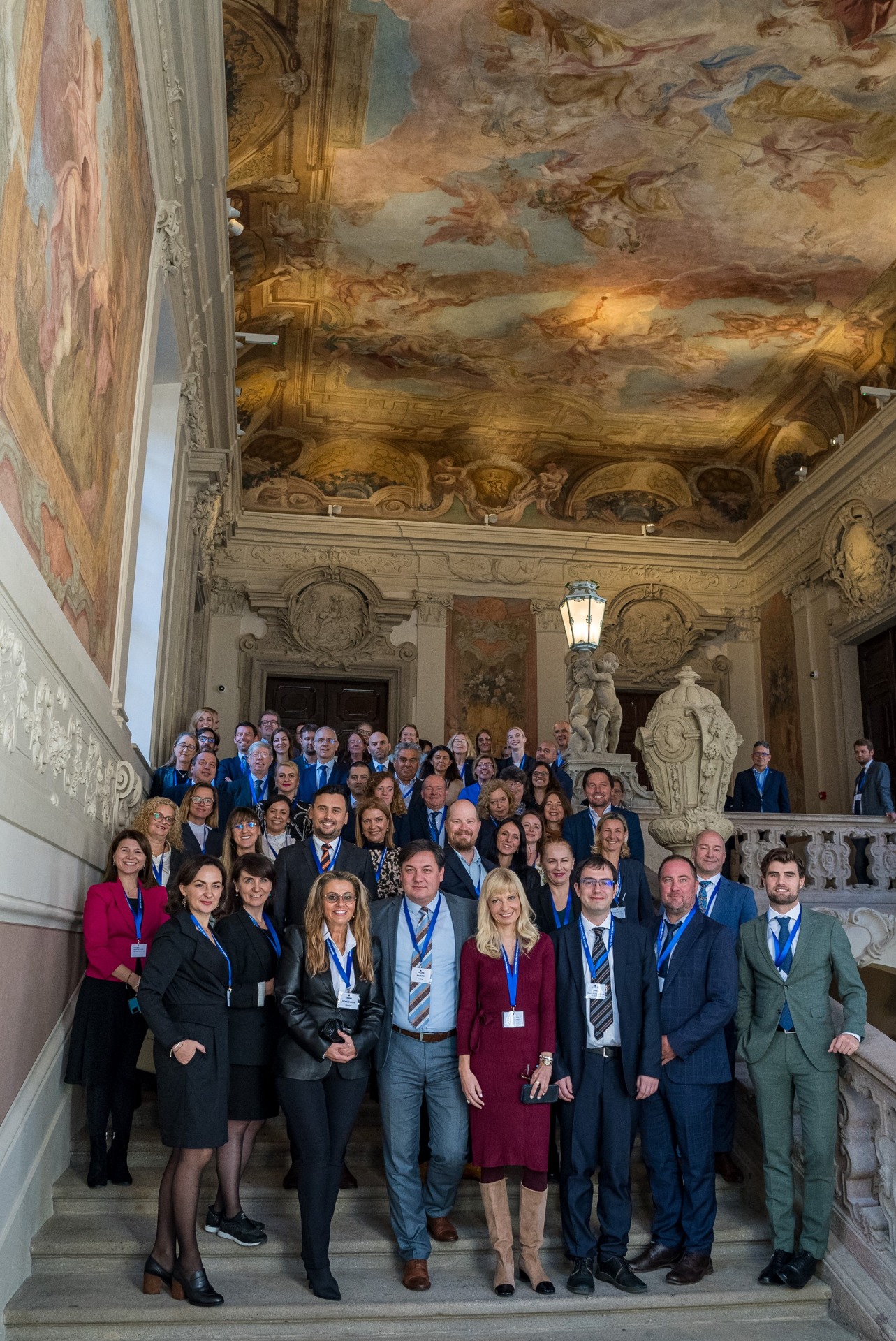
DISPA Meeting November 2019
Helsinki, November 2019



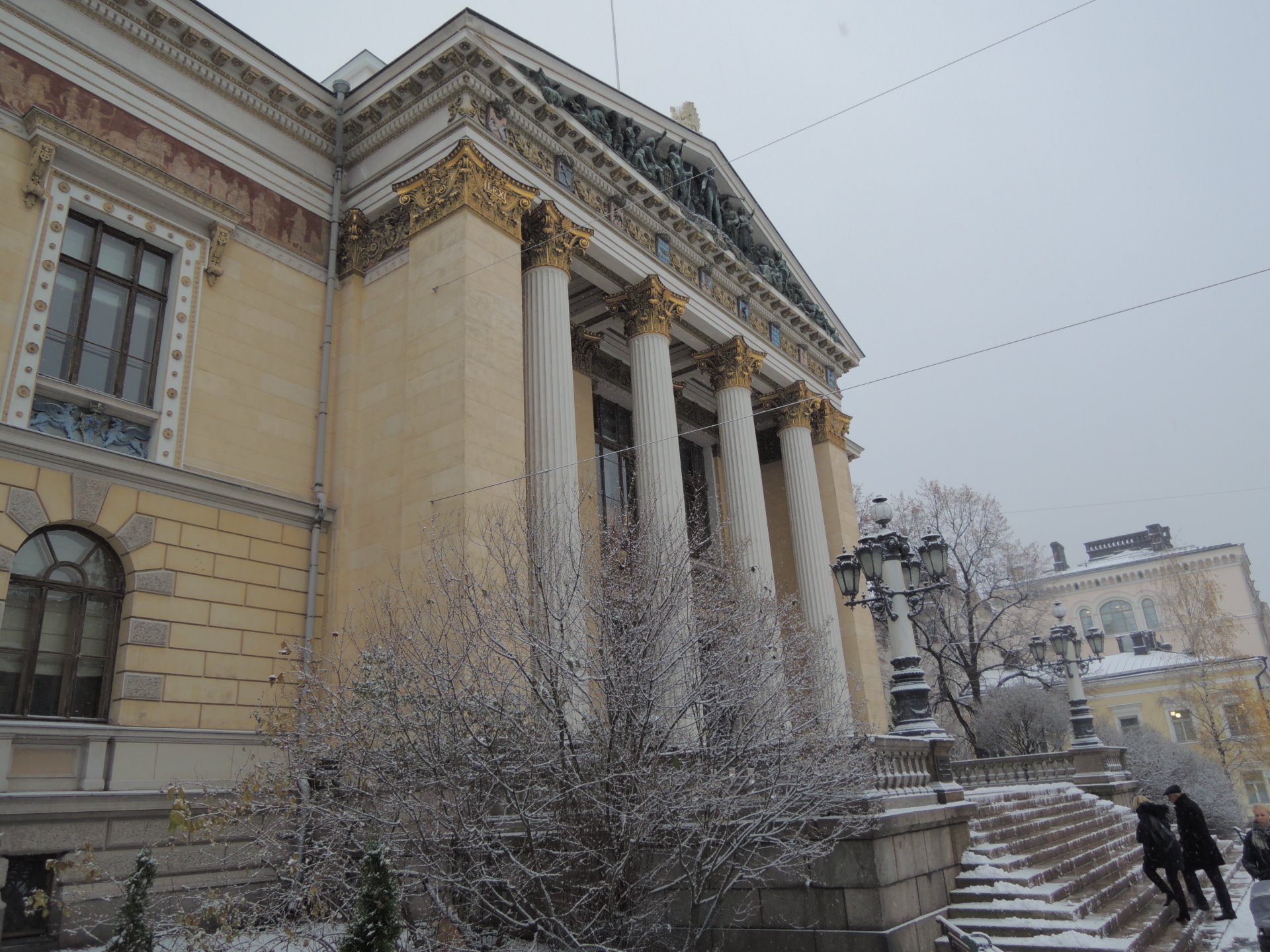
At the beginning of November, the representatives of the Institute took part on the traditional DISPA meeting (Meeting of Directors of Institutes and Schools of Public Administration). It was held on 7th – 8th November 2019 in Helsinki within the Finnish EU Council Presidency. The hosting organization was the Finnish Institute of Public Management HAUS and the main topics are trust, public leadership and eLearning.
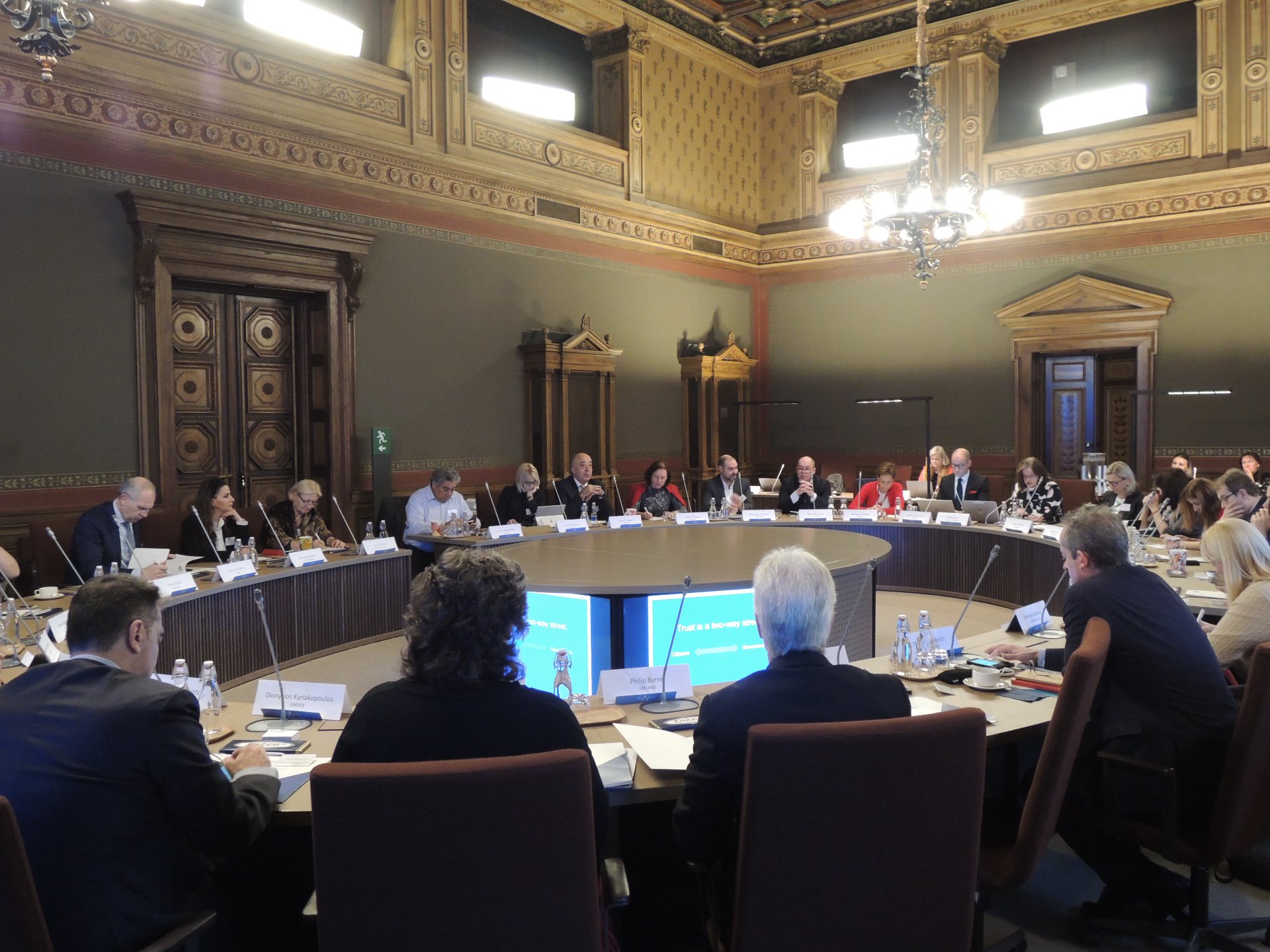
The meeting, which was attended by 20 international delegations, was launched by the HAUS managing director and Permanent Undersecretary for Governance Policy of Ministry of Finance. In her presentation, she focused on the main issue of trust, while the trust in the Finnish society reaching the peak positions in Europe (80 – 90%) according to the recent survey. Trust is also important in the relation citizen - public administration and in public administration mutually. It contributes to the cooperation, communication, sustainability, innovations and overall quality of life.
Subsequently, the professor of political science at University of Turku presented trust as a concept of and factor of of success for functioning public administration. The concept of trust lies in acting in the best interest of citizen and in the values such as competency, determination, predictability, care, credibility and responsibility. A lack of trust decreases legitimacy, prevents implementation of reforms etc. Outcomes from the various surveys across the EU were also interesting. For example, the trust in political parties is the highest in Denmark and the lowest in Bulgaria. The Czech Republic reached the sixth position to answer the query, whether it is hard to understand the politicians sometimes. Related to the European Union the trend of trust in its institutions stays quite stable during last ten 10, but reaching only 40-45%, trust in national institutions is even lower. The trust in the EU is the highest in Lithuania, while in Greece is the lowest and it is the third lowest in the Czech Republic.
In the following presentation, the director general of Public Governance Department of Ministry of Finance focused on trust and ethics in public leadership. The strategic areas according to EUPAN (European Public Administration Network) are in this respect digitalization and innovations in European public administrations, ethics and organizational culture in public administration, strategic and efficient human resources management. It is apparent from the previously held surveys focused on ethics in the public administration that for officials there are most important expertise, impartiality and rule of law while for citizens these are trust, impartiality and expertise but the citizen do not think that these values are used much in practice. The corruption is percieved on a low level but in reality there appears more dangerous structural corruption. Furthermore, a need of training in public administration and non-existence of systematic training in ethics have been noticed. Within the open-governance Finland declares the following values: access to information, trust, communication, open data, comprehensibility, participation, open processes and arrangement of activities.
The programme director HAUS presented programmes of public leadership. HAUS prepared short-term and long-term programmes focused on this topic and in 2017-2018 trained 140 senior officials and other cycles are in progress. The programme „Enabling Public Leadership“ involves 6 modules: „Global phenomena and public sector’s renewability“, „New operational models for complex problems“, „Models from abroad for systematic change“, „From public managing to public service“, „Leading people and renewing leadership culture“, „From learning and experimentation to implementation“.
Within the interactive workshop delegates participated at playing the board game „Game of Trust“ that is dedicated to a discussion and planning the improvement of openness of public administration and personal commitments to contribute to improve the situation.
The second meeting day was mainly dedicated to the presentation of eLearning platform eOppiva, which was introduced by HAUS chief digital officer. The eOppiva platform is very sophisticated and development of 1 hour content took 200 manhours. Since launching in 2018 more than 27,000 persons, the success rate is 51% and the highest attendance is usually at the courses aimed at GDPR issues. Finnish colleagues see the biggest advantages of flexibility, individualization, analyzability of training quality, cost efficiency etc..
The final presentation was focused on Common Assessment Framework (CAF). The HAUS training manager introduced CAF development and its advantages such as better services for citizens, tailor-made design for public administration, European standardization, common language, people’s involvement, evidence-based improvement and no external costs. The Finnish Institute undergoes the modernization phase within CAF, when the principle stays the same, but the bigger emphasis is put digitalization, agility, sustainability, diversity and innovation.
International meeting of representatives of training institutions in Prague
Prague, October 2019
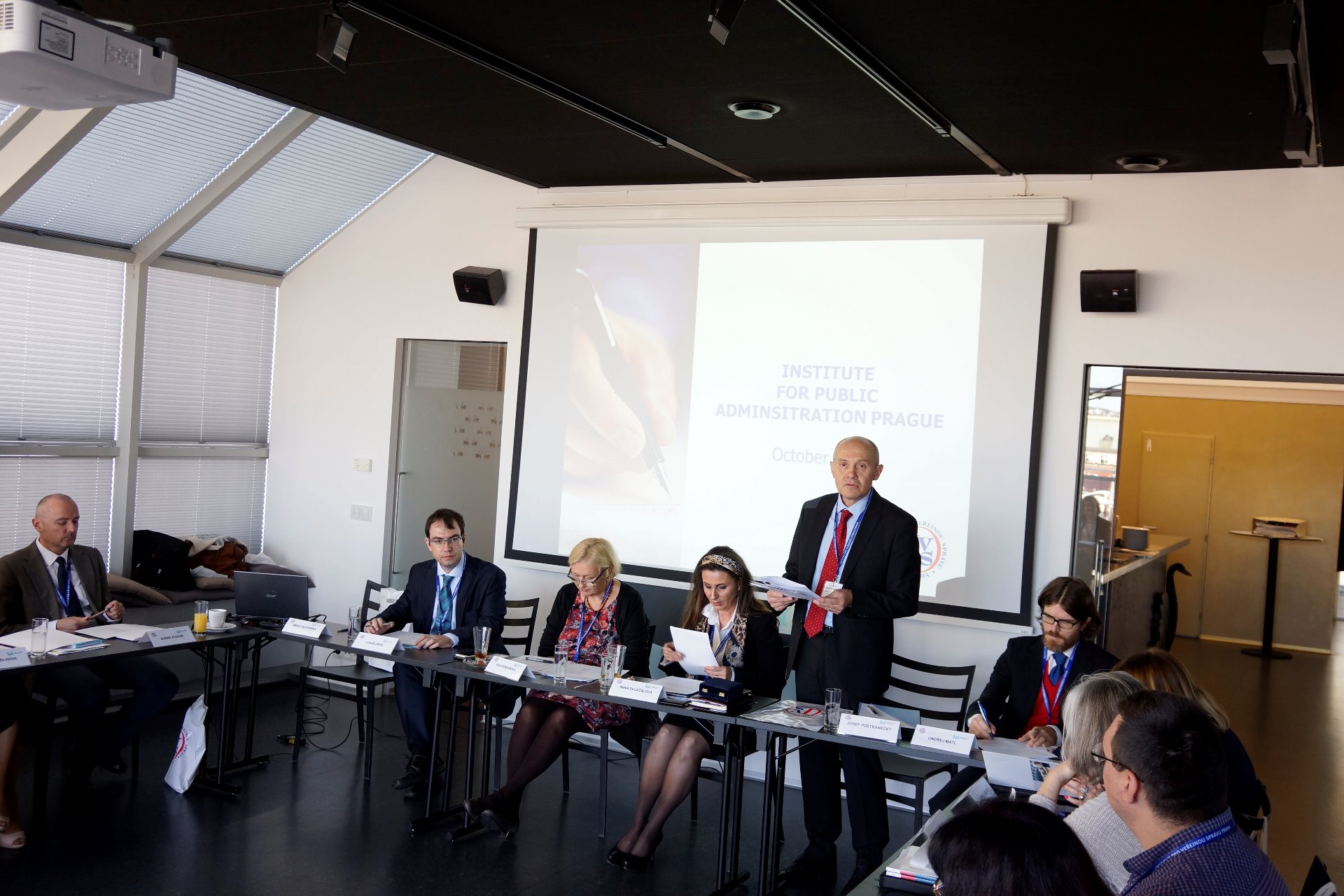
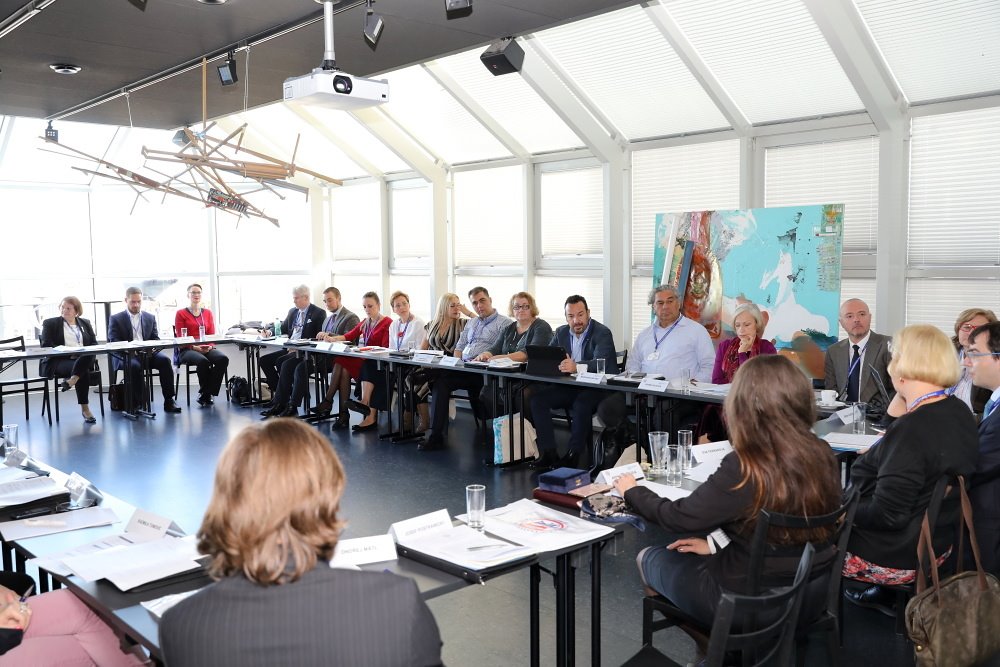
On 8th – 10th October 2019 the Institute for Public Administration Prague organized the international meeting of training institutions‘ representatives, which was held in the Prague conference centre „Černá labuť“.
The meeting was hosted with the aim to discuss current trends in training and to introduce the intended project „Summer School of Training in Public Administration“. The meeting was attended by 18 international delegates from 12 countries (Albania, Bulgaria, Ireland, Kosovo, Cyprus, Poland, Austria, Romania, Greece, Slovenia, Serbia, Switzerland), representatives of the Ministry of Interior and Association of Secretaries of Municipal Authorities.
The meeting was introduced by opening words of director of the Institute for Public Administration Prague Ms. Anna Doležalová, deputy minister of interior for state service Mr. Josef Postránecký and head of officie of deputy minister of interior for managing the legislation, state admininistration and territorial self-government section Mr. Ondřej Mátl.
The subsequent discussion on current trends of training confirmed the words of deputy minister of interior managing the legislation, state admininistration and territorial self-government section Mr. Petr Mlsna: „ Although the systems of public administration in Europe quite vary, demands on training of offficials and methods of their training are similar in principal. The proclient user friendly approach, new ways of communication, using of modern information technologies – these are just some examples of skills that are commonly expected from the officials in 21st century. Therefore, a chance of sharing good practice and mutual learning how to improve training in public administration in the Czech Republic“.
The most discussed topics were modern training tools such as eLearning, blended learning and other applications making training easier, internal training of lecturers, accreditation of training programmes and dislocation of training to regions. These findings are very valuable because they enable a comparison in the given areas and bring inspiration for a future development.
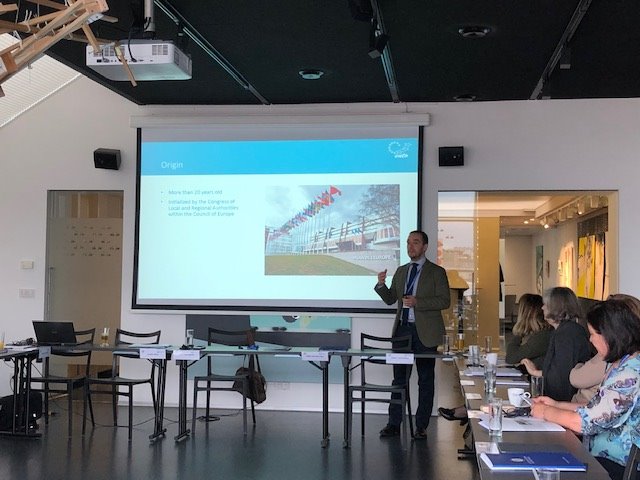
Another crucial part of the meeting comprises information on the project „Summer School of Training in Public Administration“, whose first issue is being prepared by the Institute for Public Admininistration Prague for 2020. A one-week seminar for public administration officials as well as officials will offer sharing experience and examples of good practice in current public administration topics. The aim of the summer school is to improve training of public administration officials in European countries especially in the fields that ease the communication and enable services and information of authorities to socially disadvantaged groups but also to discuss current trends in training. Therefore the participation of representatives from the big number of countries will be welcomed.
The programme of international meeting comprised the presentations given by international delegates too, which enabled a more detailed introduction of selected aspects of training, and the subsequent discussion.
DISPA Meeting May 2019
Timisoara, May 2019


The Institute for Public Administration Prague has been a long-term member of the DISPA Association, where heads and representatives of institutes and schools of public administration meet.
A representative of the Institute took part on the traditional conference, which was held this time in Romanian Timisoara in May 2019 and was organized by the hosting Institutul Naţional de Administraţie (INA). It is related with the fact that the hosting institution comes from the country of the current Council of the EU presidency.
The main topic of the meeting was Developing Competencies-Based Approaches to Civil Service Training. The attention was drawn to the presentation of the representative of World bank, who mentioned outcomes from the analysis of 20 competence models from OECD countries. Often there are highlighted terms such as ethics, leadership, accomplishing results, strategic thinking, communication, teamwork, problem solving, professionalism, interpersonal relations, efficiency, self-development and learning etc.. Other countries such as Ireland and Belgium dispose of competence models and the Belgian colleague introduced the fedreal competence model focused on general and technical competencies. There belong service, cooperation, loyalty, result orientation and self-development. There is an important shift of trend from classical learning to lifelong learning, when students overtake the responsibility for their training. Moreover, it was essential to implement a proper training needs assessment, perspective in a broader context of individual-team-organizational competence, talent development and appropriate evaluation. The paper of the president of Greek training centre concerned also the reconstruction of the administration system. The National Register for Decision Makers is the pillar, where competencies of empyloees and middle and senior management of public administration are defined.

Furthemore, the programme was divided into 2 workshops „What DISPA Can Learn“ and „What DISPA Can Share“. The Institute’s representative took part on the second mentioned and discussed with colleagues a partial question what knowledge, skills and approach lecturers should have in the competence – based training. The discussion showed that knowledge of the field, knowledge of target group’s training needs, didactic skills, interaction, feedback with students, ICT skills etc. are crucial.
The conference programme also comprised the introduction of Structural Reform Programme of European Commission, which serves as the technical support for creation and implementation of reform areas and within its framework the hosting institution INA conducted the project of its development.
The DISPA meeting confirmed again the beneficial tradition that current trends in public administration, among which competence models belong now, are discussed and simultaneously it provides an indispensable platform for communication with international partners
-------------------------------------------------------------------------------------
Visit of Thai Delegation in the Institute
Prague, November 2018

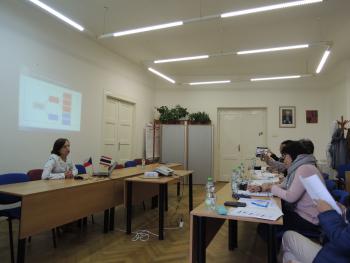
On Monday 19th November the delegation of representatives of Doctoral Programme in Public Administration, Faculty of Social Sciences and Humanities at Mahidol University in Thailand visited the Institute for Public Administration Prague. For doctoral students and accompanying professors there were presented main roles and activities of the Institute. This presentation was followed by the lecture of the head of training department who focused in detail on the issue of training of public administration officials in the Institute. The members of delegation raised many questions and realted discussion to both topics of functioning of the Institute as well as training.
---------------------------------------------------------
DISPA Meeting November 2018
Vienna, November 2018

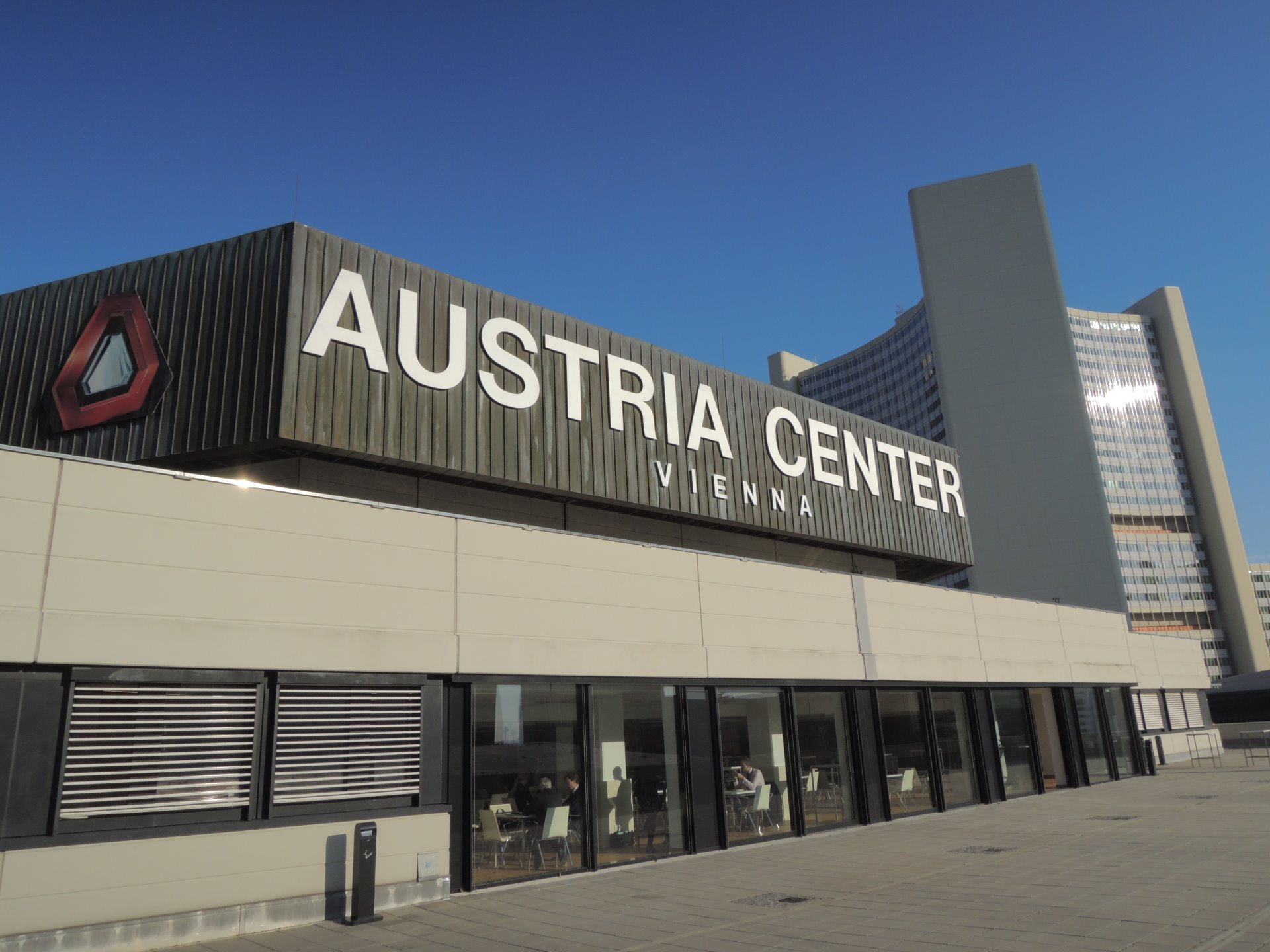
In the mid of November the representative of the Institute for Public Administration Prague participated at the regular DISPA meeting (meeting of Directors of Institutes and Schools of Public Administration). The main topic of the event, which was hosted by the organizing Federal Administration Academy in Vienna, was the linkage of perception and brain working with learning.
The first day involved two extensive lectures. The initial presentation given by the head of Department of Cognitive Neurobiology of Centre of Brain Research at Medical University of Vienna was dealing with learning and decision making in cerebral cortex. In detail he described brain’s functioning, explained perception and reactions of brain on known stimuli, e.g. pictures of well-known people, or he demonstrated on sample case studies how brain changes can cause a transformation of personality. In the second lecture given by the representative of the Department of Basic Psychological Research and Research Methods (Group of Cognitive Psychology) at University of Vienna, there were presented cognitive processes underlying perception and attention. They were illustrated on the samples of various misleading pictures and changing sequences. The factors that influence perception involve the evolutionary knowledge, context, prior knowledge, goals and motivations and other sensory inputs. The brain still creates predictions, thus perception is a form of construction. Furthermore, attention is divided to selective and limited, divided, voluntary and involuntary. To gain the attention is conditioned by significant stimuli or events.
In the initial section of the second day the director of Serbian National Academy of Public Administration informed the delegates about the plans of his institution. Mainly they include a preparation of guidelines with central methodology for training, support of digital skills in public administration or creating multilingual learning management system. The presentation was followed by the speech of the director of Finnish Institute of Public Management HAUS, who shared her experience with the realization of twinning projects and principles of successful cooperation. The final session comprised a discussion on intensifying and possible project cooperation among DISPA members, revitalization of European Reciprocal Training Programme seminars or the crucial upgrade of the DISPA website.
--------------------------------------------------------------------
Visit of Vietnamese Delegations in the Institute for Public Administration Prague
Prague, October 2018

The Institute had an opportunity to welcome two Vietnamese delegations in its premises during autumn.
In September the representatives of the Vietnamese Ministry of Public Planning and Investment came for the study visit to the Czech Republic. Within their extensive programme they also visited the Institute for Public Administration Prague, where there was a set of lecture prepared for them. After the introduction of the Institute’s main activities, there followed the presentation on the course of special professional competence exams. The subsequent lectures were focused on topics of leadership in public administration and on ethics and integrity in public administration.
In October the Institute was attended by 20 representatives of the Vietnamese Trade Unions Confederation. That time the presentations were dealing with issues of ethics in state administration a leading teams in public administration.
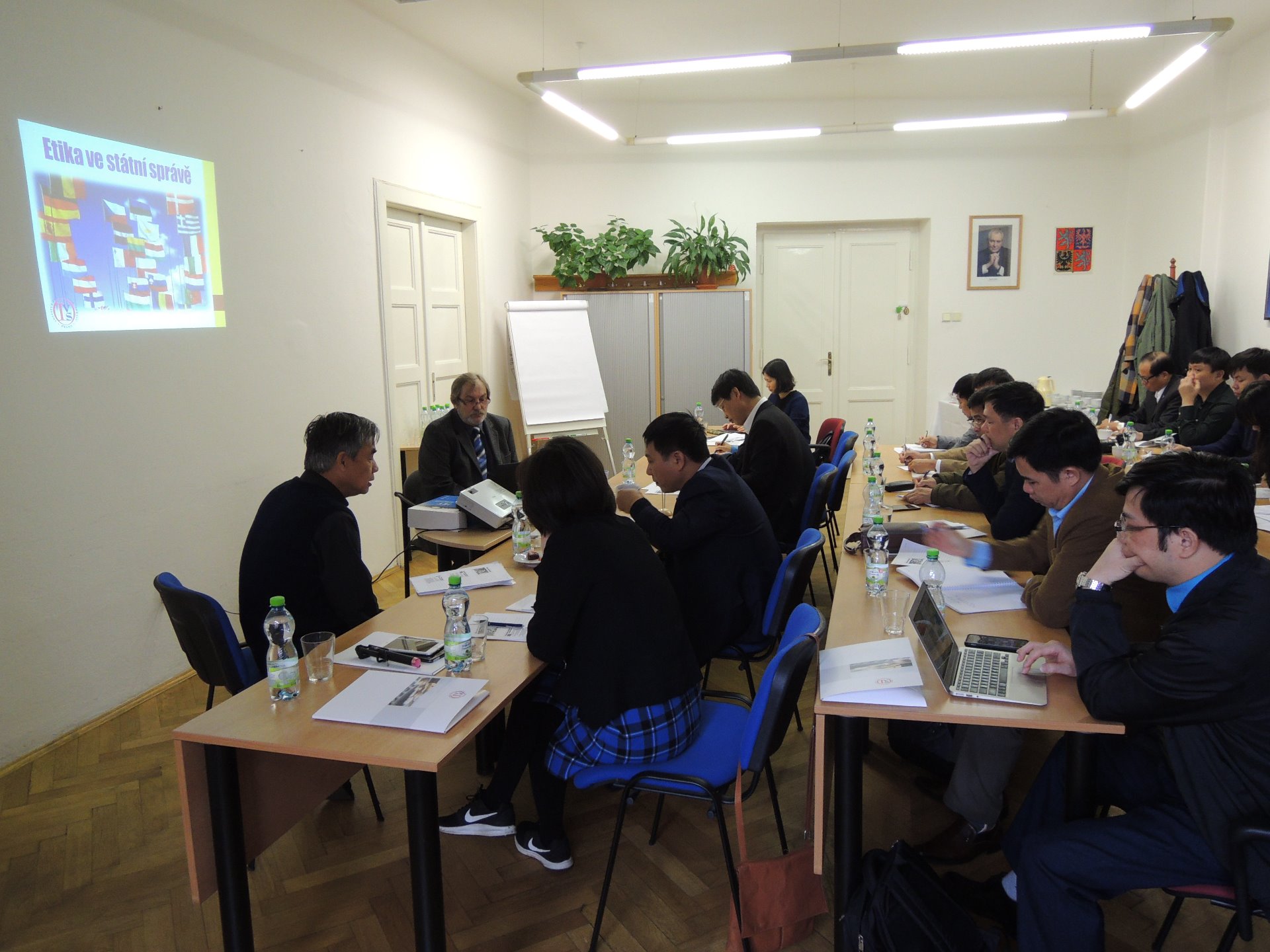
In both cases the presentations were followed the diverse discussion, when the Vietnamese delegates showed quite a detailed interest in the discussed topics and so they could compare the state in the Czech Republic with the situation in Vietnam.
------------------------------------------------------------------------------
DISPA Meeting June 2018
Sofia, June 2018
The representative of the Institue took part on the Sofia DISPA meeting in the second half of June.

The DISPA meeting, where heads and other representatives of institutes and schools of public administration encounter, organized by the Bulgarian Institute of Public Administration held the title „Learning in the Digital Age : Intelligent Assistance“ and traditionally it was divided into a theoretical section with presentations and a practical session filled in with workshops.
Following the opening speeches, the morning session of the first meeting day was commenced by the representative of OECD Public Governance Directorate focusing on the issue of skills for innovations in digital public administration. Subsequently, the director of Sofia University Distance Education Center was talking about authentication and authorship as a mechanism for enhancing the quality of online learning and furthermore the director of training programmes in a private Bulgarian company focused on possibilities and potential of virtual classroom. In following papers, representatives of Bulgarian companies focused on utilization of gamification in adults training and online coaching.
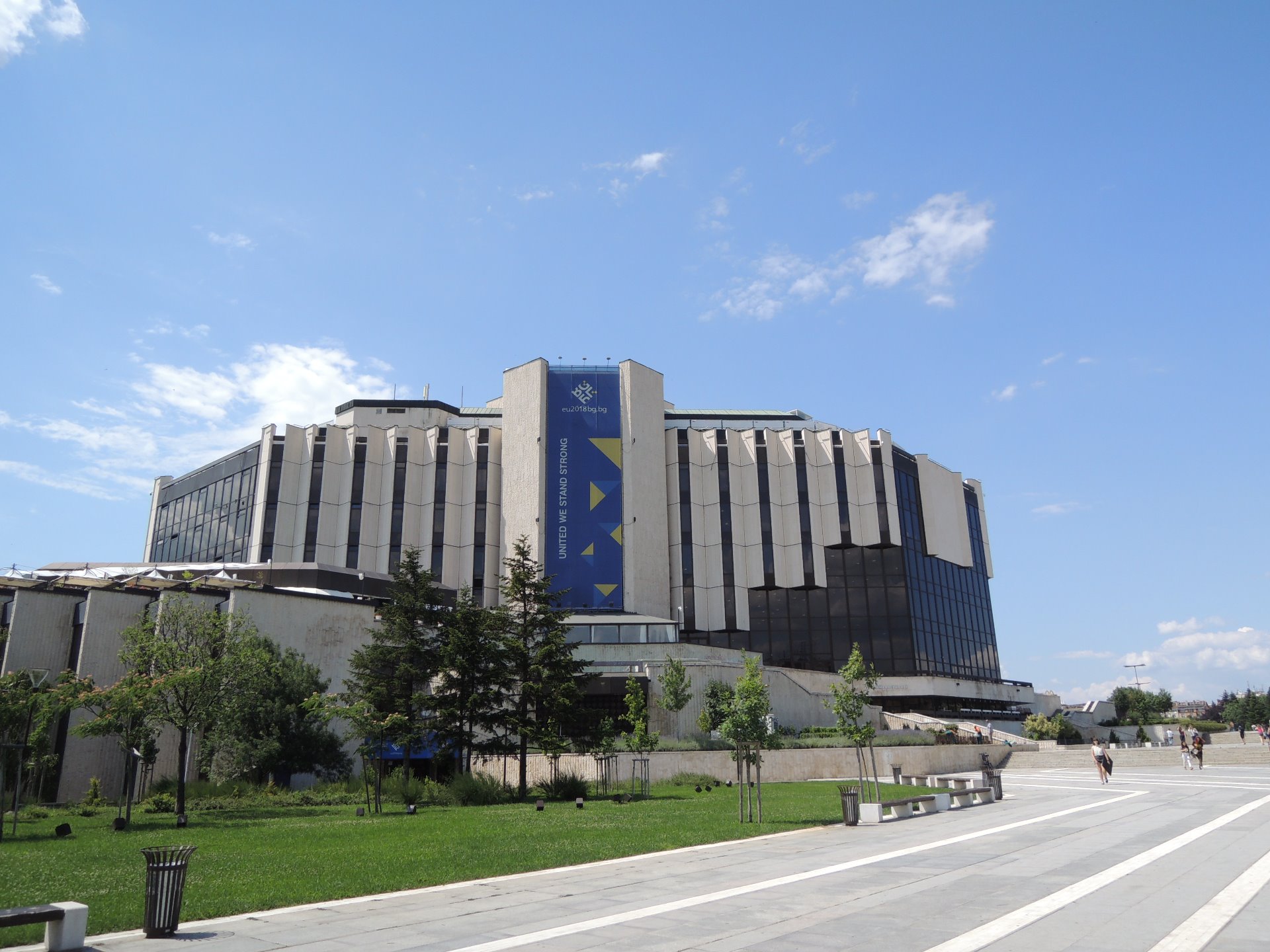
The afternoon session was divided into parallel workshops, when the Institute‘s representative participated in the section „Studies and Analyses in Learning and Development“ and had an opportunity to introduce the project designed by the Institute that is focused on professionalization of officials of territorial self-government units and creation of competence model. Their experience with realization of projects was also shared by colleagues from Poland and Bulgaria. For the first time in history, there were invited orgnaizations from Western Balkans for the DISPA meeeting. Therefore, institutes from Serbia, Republic of Macedonia and Kosovo could present their activities.
The second day started with a practical workshop in order to support cooperation and creativity through painting a collective picture. This session was followed by the summary of workshops from the previous day involving the evaluation of questionnaires of particular participating institutions on current and prospective training topics and by the tradional contribution of the news from European School of Administration.
Visit of Uzbek Delegation in the Institute
Prague, October 2017

Similarly as in spring of this year, representatives of of the Institute had an opportunity to welcome the Uzbek delegation at the end of October. During the week long study visit to the Czech Republic, which was realized within the United Nations Development Programme, the hosting Ministry of Finance of the Czech Republic prepared a diverse programme, which included also a visit to the Institute.
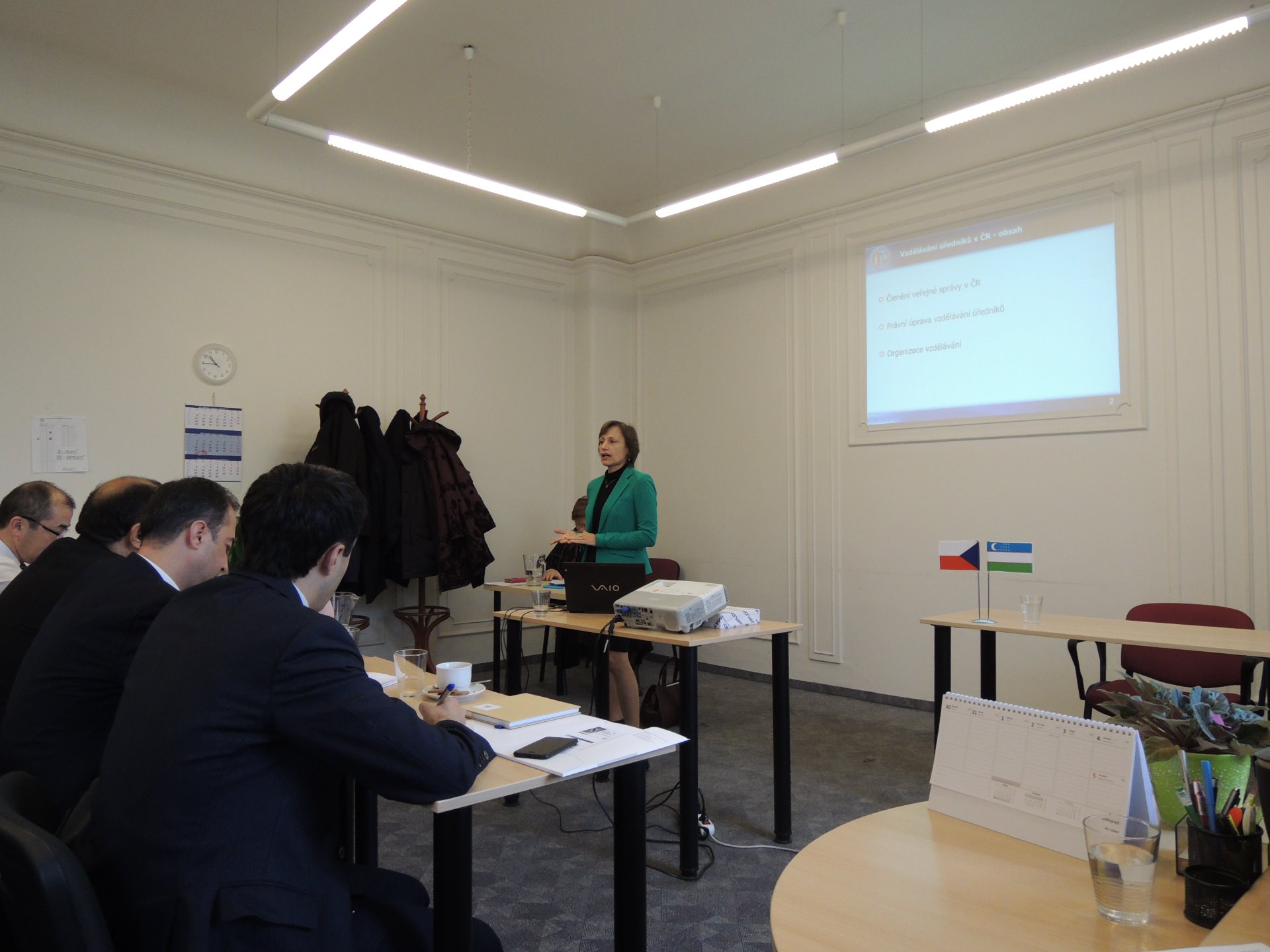
After the welcome speech given by the first deputy director Mr. Dušan Zouhar the representative of research and international cooperation department Mr. Lukáš Jirsa introduced main activities of the Institute. It was followed-up by head of training department Ms. Zdeňka Šilhová, who presented the system of training of public administration officials. The programme of presentations was concluded by the training specialist Mr. Petr Kuš, who focused on the issue of training in territorial self-governments budgets.
The members of delegation that was largely composed of Uzbek ministry of finance representatives asked speakers many qureies, thus the meeting brought a mutually interesting exchange of experience and good practice.
Visit of Chinese Delegation in the Institute
Prague, September 2017

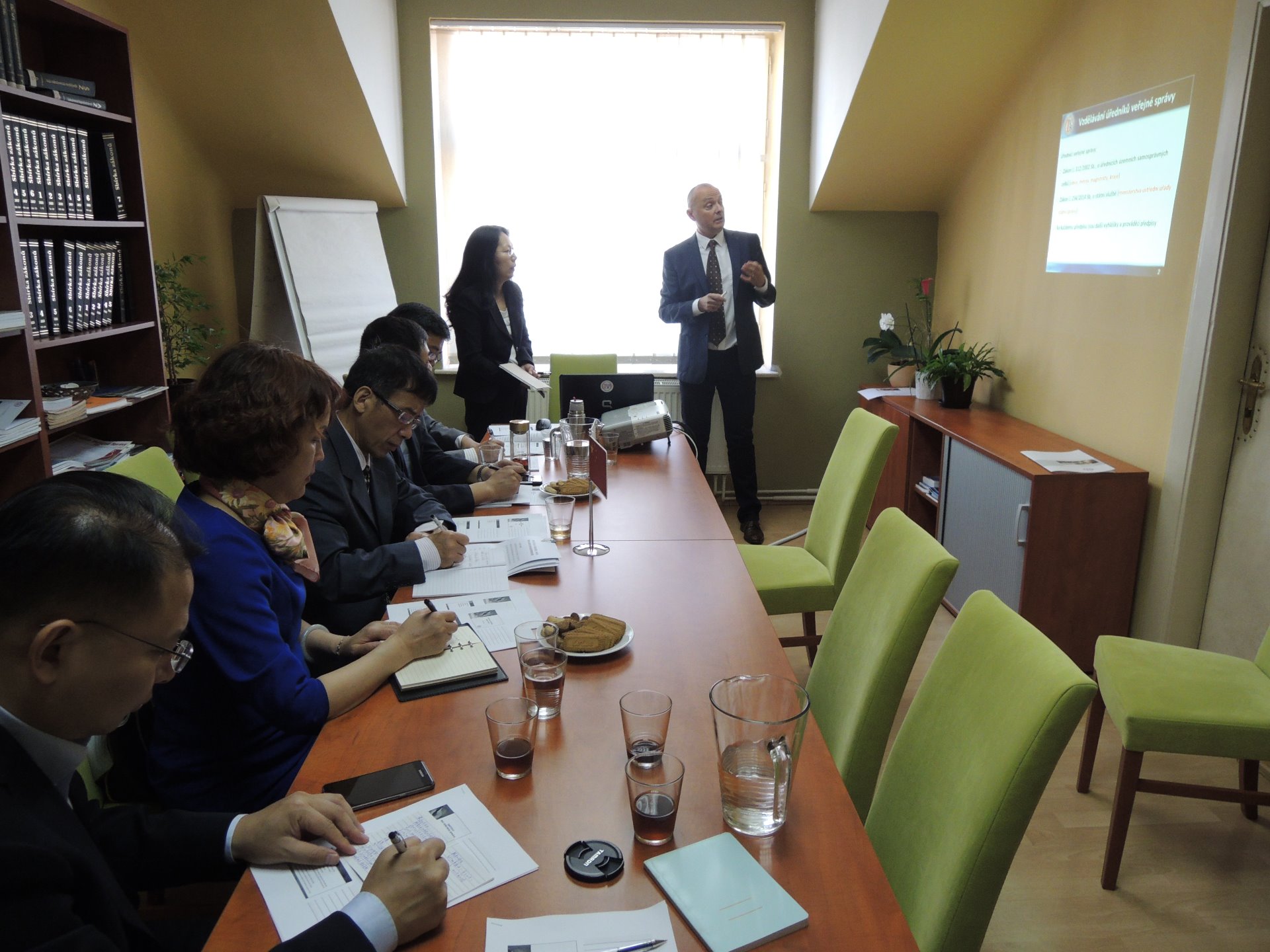
On 4th September 2017 representatives of the Institute welcomed in the Prague premises the Chinese delegation of Shanghai public administration organizations and training institutions for officials. Within their study journey to the Czech Republic the Chinese colleagues also visited the Institute for Public Administration Prague.
In the beginning of the meeting the international cooperation specialist Mr. Lukáš Jirsa introduced main activities of the Institute. In the following presentation the first deputy director Mr. Dušan Zouhar focused on the introduction of the issue of public administration officials training in the Czech Republic and related key training programmes and Institute’s activities. Presentations were followed by the extensive discussion when the Chinese colleagues showed a great interest in experience and best practice examples.
DISPA Meeting May/June 2017
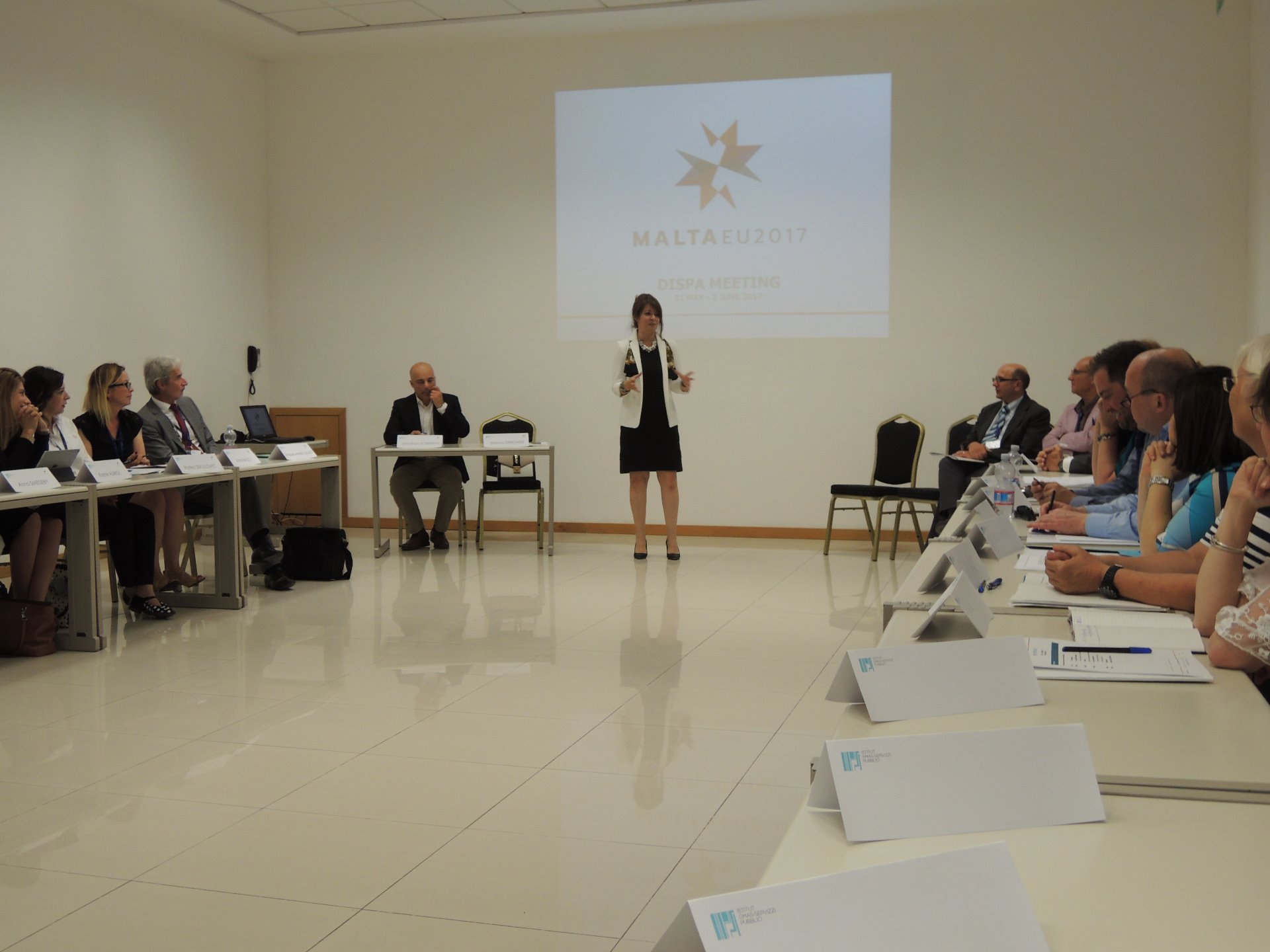
Malta, May/June 2017

In the end of May and beginning of June 2017 the delegate of the Institute took part on the meeting of representatives of institutes and schools of public administration DISPA.
The meeting, which was held in Malta this time, was focused on the topic of reinventing training. The hosting Institute for Public Services prepared the extensive programme, in which parallel workshops were the core. Those were focused on issues of Rethinking Training Content and Methodology, Developing Leaders through Training, Developing Digital Skills across Public Administration and Promoting Ethics in Public Administration. The Institute’s representative participated on the last mentioned workshop, where he had an opportunity to introduce the topic with the case study on ethics in public administration in the Czech Republic and the training in this branch. Subsequently, together with colleagues of German Federal Academy of Public Administration, Finnish institute HAUS, European School of Administration from Brussels and Belgian Institut de Formation de l’Administration Federale the discussion what to involve into ethics followed. Often the fight against corruption is being mentioned, but it is not the only part and the ethical behaviour should be considered more complexly in training. Except the influence of family at bringing up, one shall educate himself/herself own continuously, because codes of ethics are important but they are not able to guarantee ethical behaviour on their own. An indispensible aspect for ethics in public administration is represented by the role model of superiors. Subsequently, a broader scope of political culture was discussed. A very interesting part of the workshop was a discussion what behaviour is still ethical and what is already beyond. In this relation, there is inspiring the approach of Belgian colleagues, who dispose of a box, where they gather suggestions with particular situations and then they discuss whether they are ethical or not. During the workshop also a suitable form of training was discussed. A frequent case of eLearning course shall be amended suitably with a face to face part with possible role plays and model situations. A personality of lecturer is also important for the success of training course is also important and in the debate the participants agreed that in case of ethics it is suitable to have a suitable team of lecturers of various expertises in order they could provide a complex perspective on the problem.
The programme was also dedicated to other lectures such as public policy from behavioural economics point of view, Swedish programme for training of top managers or structured democratic dialogue in Cyprus.
--------------------------------------------------------------------------------------------------
Meeting with Director of European Institute of Public Administration
Prague, May 2017
The meeting with representatives of European School of Public Administration the director Ms. Marga Pröhl and the head of section Public Management Ms. Crisitana Turchetti was held on 18th May on the occasion of their business trip to the Czech Republic realized thanks to the invitation of Ministry of Interior of the Czech Republic. With the participation of colleagues from the Department of Training and International Cooperation in State Service of Ministry of Interior, the representatives of the Institute presented its activities, main tasks as well as the issue of training of public administration officials in the Czech Republic. Presentation was followed-up by the discussions of opportunities of mutual cooperation within training courses realization.
-----------------------------------------------------------
Visit of Uzbek Delegation
Prague, April 2017
In the beginning of April 2017 representatives of the Institute welcomed the Uzbek delegation in its premises. The delegation arrived to the Czech Republic within the project of United Nations Development Programme and in cooperation with the Ministry of Finance of the Czech Republic. The visit in the Institute was the final point in the programme of the delegation, which was mostly composed of representatives of Uzbek Ministry of Finance as well as economic and financial departments of regional authorities.
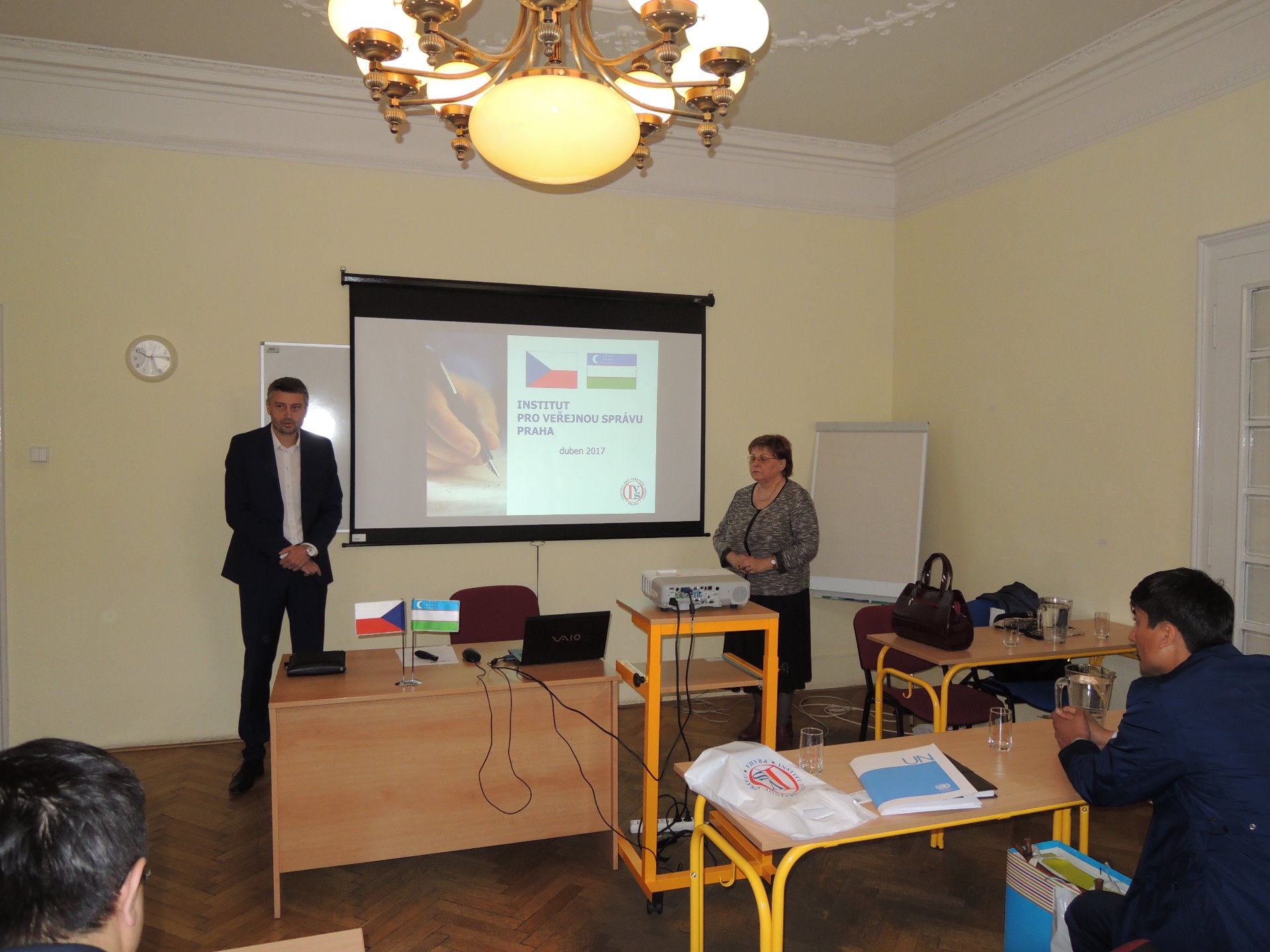
After the welcome speech given by the director of the Institute Mr. David Zámek, the international cooperation specialist Mr. Lukáš Jirsa presented basic activities of the Institute. In the subsequent presentation, the head of training department Ms. Zdeňka Šilhová focused on training of public administration officials in the Czech Republic. The final paper was given by the training specialist Mr. Petr Kuš, who presented the issue of training in the area of territorial self-governments budgets.
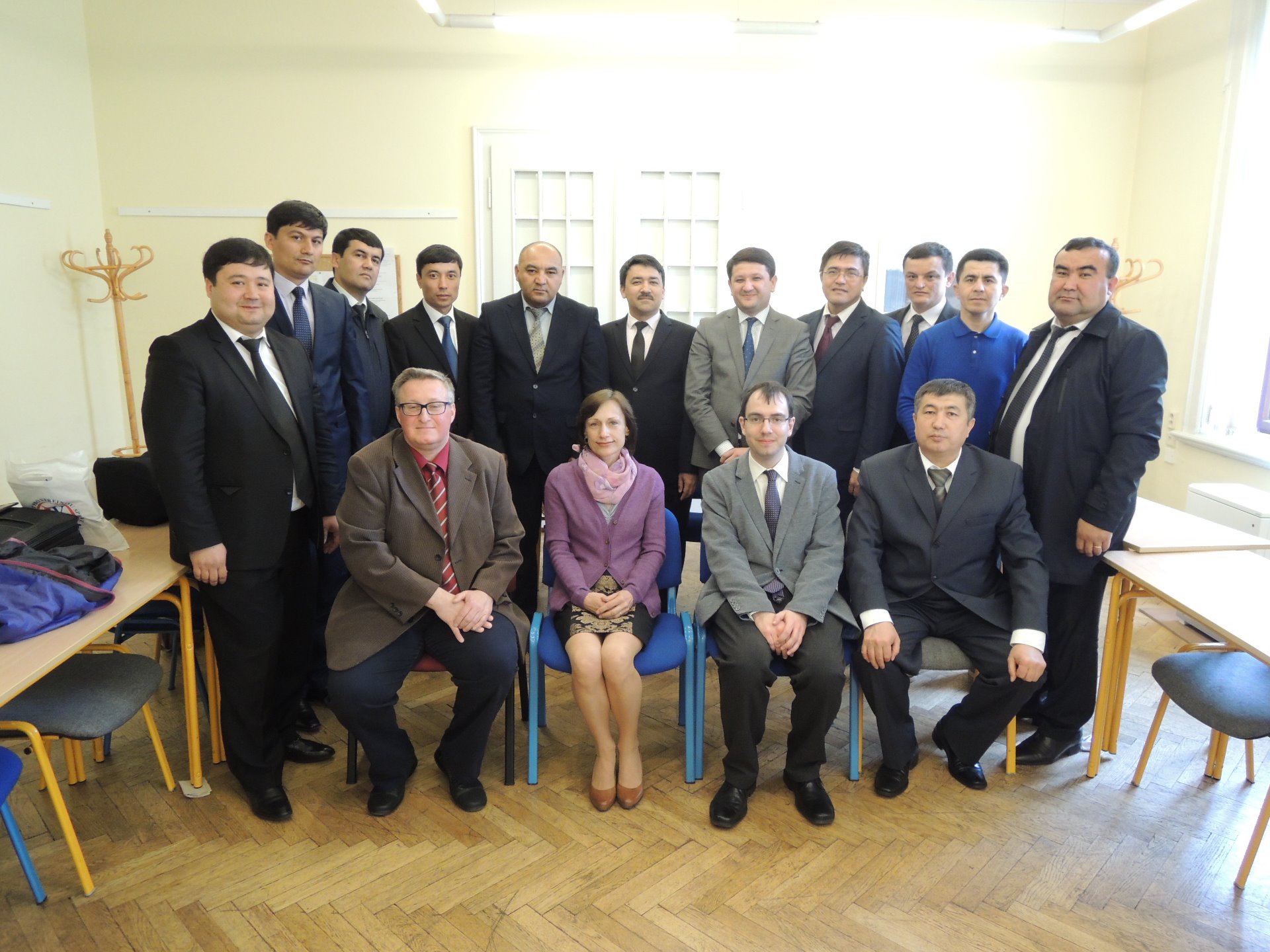
The meeting framed with discussion brought Uzbek colleagues interesting and useful information that can be possibly used in their work.
---------------------------------------------------------------------------------
Invitation for ERT seminar to Sweden
Colleagues from the Swedish Council for Higher Education invite people interested for the seminar of Europena Reciprocal Training Programme (ERT), which will be held in Stockholm on 9th – 11th October 2017- the seminar is focused on issues of public administration and interconnection of Sweden and the European Union
More details on the programme you can find here, the registration form is attached too.
The working language is English, the seminar fee is not applied. Participants cover transport and accommodation costs themselves. Deadline for applications is set on 31st July 2017. The organizer reserves the right to cancel the seminar in case of insufficient nuber of registered participants.
European Public Sector Award
The European Institute of Public Administration (EIPA) is announcing the opening of the Call for applications for its European Public Sector Award – EPSA 2017.

Under the overarching theme “An Innovative Public Sector in 2017 – New Solutions to Complex Challenges”, EPSA 2017 seeks to showcase and reward those cases submitted by public administrations which have demonstrated an innovative approach to public service delivery and policy-making to the increasingly complex, difficult to address and often multi-dimensional challenges faced by the public sector in Europe.
The award scheme is open to European public sector institutions from all administrative levels, as well as public sector enterprises, agencies and public-private partnerships. The lead applicant must be a public sector institution or authority - other applicants in a consortium, can for example be private companies, semi-public institutions, NGOs, universities or training institutions.
Applications can be submitted until 13 April 2017.
To learn more about EIPA, the EPSA 2017 theme, the benefits of taking part in EPSA and to get inspiration for submission of interesting cases the link for video is attached.
For further information about EPSA 2017 and how to submit your online application(s), please consult www.epsa2017.eu or get directly in touch with the EPSA 2017 team at Email: info@epsa2017.eu
--------------------------------------------------------------------
Study Visit from Georgia
Prague, December 2016

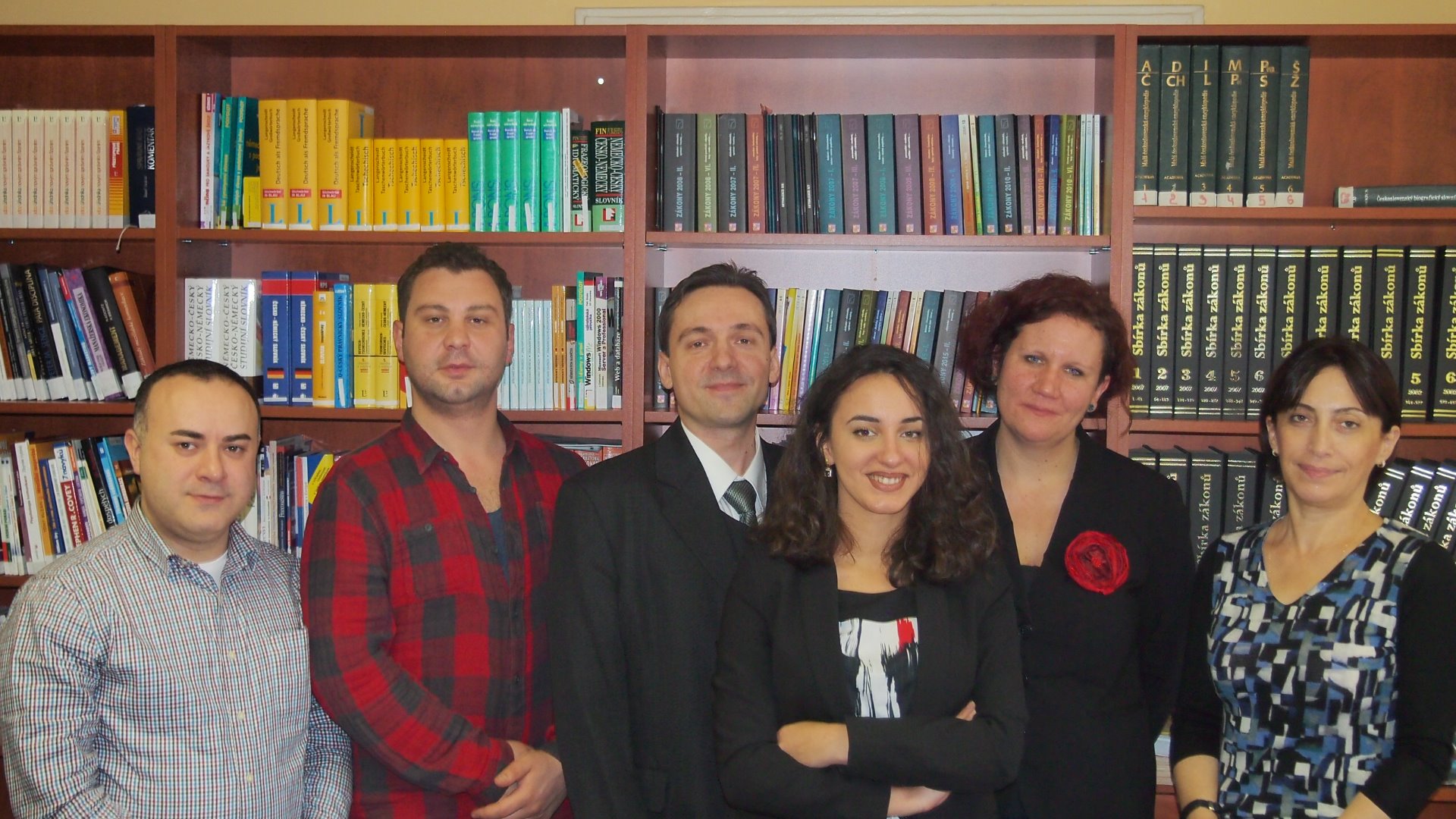
In the beginning of December 2016 the Institute hosted the study visit of Georgian delegation to the Czech Republic. Similarly as in 2014 and 2015 within the project „Support of Public Administration Reform in Georgia“, which the Institute cooperates with Czech Development Agency at, the study visit of representative of Georgian training institutions of public administration was held.
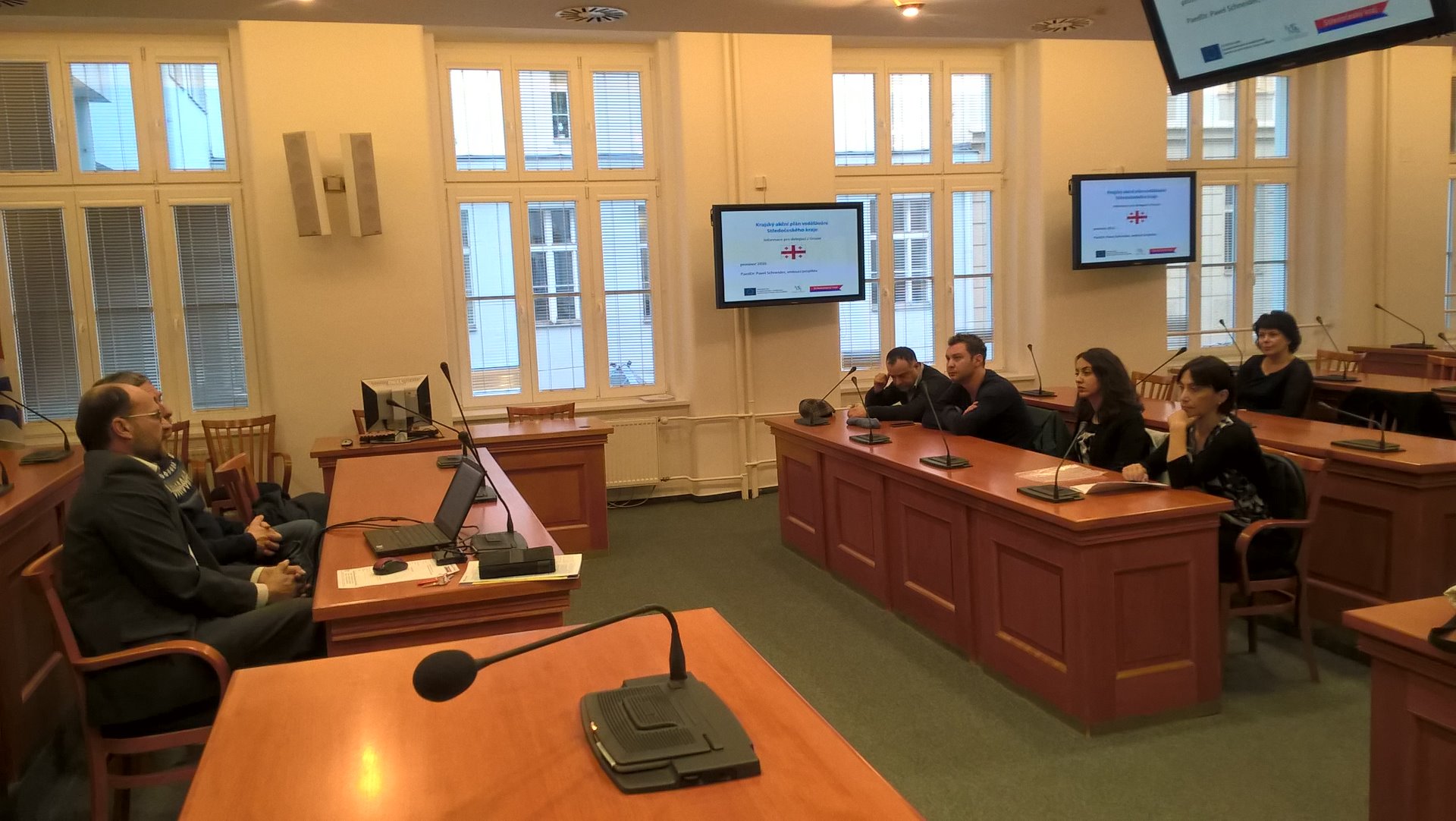
This time the topic was the training quality assessment in public administration. Participants attended the series of presentation focused on the accreditation of training from various perspectives, issue of quality assessment of training programmes, training institutions or quality of lecturers. Besides others the programme was ammended by presentations on the system of public administration of the Czech Republic or the current of eGovernment. Moreover, Georgian colleagues also had the opportunity to visit Regional Authority of Central Bohemian Region, Office of Government of the Czech Republic, Municipal Authority in Mnichovice or the training centre of Institute in Benešov.
Live Stream of Conference on Optimization of Public Administration on Western Balkan
Our colleagues from Regional School of Public Administration (ReSPA) based in Montenegro offer an oportunity to follow a live streaming of the conference on issues of optimization of public administration in the Western Balkan region.
The Regional School of Public Administration has devoted its 9th Annual Conference to opening direct channels of discussion on experience, methodologies and innovative practices in the process of optimization of public administration in the Western Balkans. ReSPA has chosen this topic so as to help demystify optimization as one of most important mechanisms for pushing public administration reforms towards creation of more rational, transparent and accountable services for the citizens of this region. The expected impact of the ReSPA's Annual Conference is initiation of a more permanent experience exchange and concrete follow-up activities related to the systemic changes needed for effective optimization of public administration.
Conference video link for 15th November: youtu.be/NgEXiRrwsL0
Conference video link for 16th November: youtu.be/MzQdJDd1MGM
Twitter: #ReSPAconf; @ReSPA_EU
The record of the whole course of conference you can find on above mentioned links.
-------------------------------------------------------------------------------
DISPA meeting October 2016
Brussels, October 2016
In the second half of October 2016 the delegate of the Institute participated on the traditional meeting of representatives of schools and institutes of public administration .
A topic of the meeting, which was this time held in premises of European School of Public Administration in Brussels, was satisfaction and balance of public administration employees. This aspect of so-called well-being rises on importance and naturally leads to better work performance and results too.
In the beginning, in her speech of transformational leadership the representative of Olivier Mythodrama consultancy company offered an interesting parallel to the plot Shakespeare’s drama The Tempest. The Finnish colleague from the training centre HAUS focused on ways of sustaining the well-being of their employees. Essential assumptions are well-functioning work organization, just and supportive leadership, balanced ratio between requests and competences, diverse and motivating tasks, possibility to influence work and participate on decisions, horizontal management, developing professional skills, good cooperation, relations and atmosphere at workplace, safe and healthy working conditions and flexible working hours. Furthermore, open communication, efforts to solve problems, balanced age composition of staff and leader as role model are also important. The key idea is that all employees are responsible for well-being in organization.
From other presentations, a point of view of the representative of European Commission from DG Human Resources and Security, who presented the Fit@Work Programme. By gradual steps (regular medical check-ups,optimization of working environment, tele-working, change of alimentation habits etc.) the programme aims to reach satisfaction of employees, thus their work efficiency will rise too. The aspect of well-balanced professional and private life also mentioned in her speech the representative of Happyformance company, while the statistical quantification that a satisfied employee is more efficient at work by 55% is interesting.
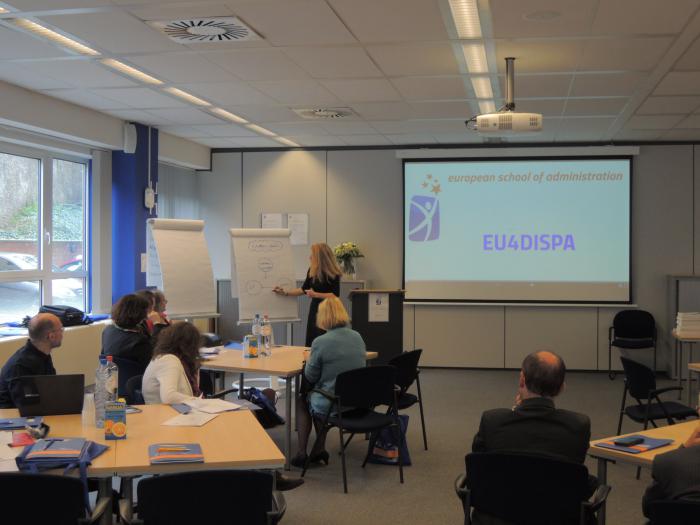
The presentations were accompanied by e.g. the speech of the training manager of European School of Administration focused on the EU development and less-known and inspiring, which stood in the background of the European integartion events or interactive workshops focused on on physical, mental and emotional well-being.
---------------------------------------------------------------------
Invitation for ERT Seminar in Germany
 The German Federal Academy of Public Admininistration (BAKÖV) is going to organize a seminar within the European Reciprocal Training Progamme (ERT), which holds the title „Germany and Europe“. The seminar is going to be held from 28th November to 2nd December 2016 in Berlin and Dresden. Now the deadline for applications has been extended and the seminar fee is not required anymore.
The traditional seminar will focus on the German public administration system, role of Germany in European policies, but also on the issue of migration crisis in relation with its impact on labour market and social policy.. Participants will have an oportunity to visit important federal institutions such as (Federal Parliament, Federal Council, Federal Chancellery or Federal Ministry of Economics Affairs and Energy) in Berlin, but also Saxony State Parliament, Chancellery or Ministry of Labour in Dresden. The programme also contains a guided tour focused on everyday life in divided Germany, in Dresden then a discussion about the relation of Saxony to the Czech Republic and Poland and a guided tour to the famous Glass factory for cars manufacturing.
A speciality of the ERT programme is represented by the facilitation of the visit in an institution of a similar character as the home organization of participant.
Date: 28th November – 2nd December 2016
Venue: Berlin, Dresden
Working language: English
Seminar fee : free of charge
Deadline for applications: 25th September 2016
Note: The price is related to the seminar fee and does not include travel and subsistence costs of participants. In case the participant’s institution can offer the reciprocal arrangement of a similar seminar in his/her home country, the seminar fee is not due to pay. In case of low interest, the organizer reserves the right to cancel the seminar.
The draft programme is available here
The registration form is available here
You can find more information on ERT programme here
For registration and more detailed information on the seminar in Germany please contact representatives of the organizer Ms. Katharina Konstanty
e-mail: katharina.konstanty@bakoev.bund.de ; telephone: +49 228 99 629-5310
and Ms. Angela Ahrens
e-mail: angela.ahrens@bakoev.bund.de ; telephone : +49 228 99 629-5311
For general information please contact Mr. Lukas Jirsa.
e-mail: l.jir@institutpraha.cz; telephone: +420 224 241 280
DISPA meeting
The Hague, April 2016

The topic of the meeting of representatives of institutes and schools of public administration held the title „Connected Society: Creating an Agile Learning Environment“. After the topic’s introduction by PBLQ high representatives, the ombudsman of Amsterdam and surrounding municipalities presented examples of complaints and ways of their solution from his practice as well as the necessity of modernization of organization of public administration management, so called infocracy. His presentation was followed-up by the director of social domain at Municipality of Utrecht, who focused on transformation of social affairs. By the fact that still higher responsibility is delegated to self-government units, the transformation from the care for citizen approach to enforcing their strong aspects and higher civic engagement. Radical changes evoke concerns, therefore the communication is important, learning step-by-step and to take difficulties as development tasks. With the change there is also related a reorganization of administrative authority leading to a flatter hierarchical structure, staff reduction, work based more on mutual trust than controls. The training of employees is also going through changes.
In the afternoon session, the PBLQ representative introduced characteristics of individuals through colours typology. These findings conribute to improve personal efficiency, team dynamics as well as leadership skills. The first day was finished with workshops on „The Job as Base for Learning“, „Team as a Learning Environment“, „Type of Leader/Manager“.
The second was started with the summary of outcomes from workshops of the previous day. In the following the representative of the Institute for Public Administration Prague had an opportunity to present experience and good practice from the realization European Reciprocal Training Programme seminars (ERT). Similarly the representative of Bundesakademie für Öffentliche Verwaltung (BAKÖV) shared German experience. The programme of presentations was closed by the speech of the general director of Asfaloth education and training center, who illustrated on historical examples, what the public administration official needs to know in the quickly changing society.